
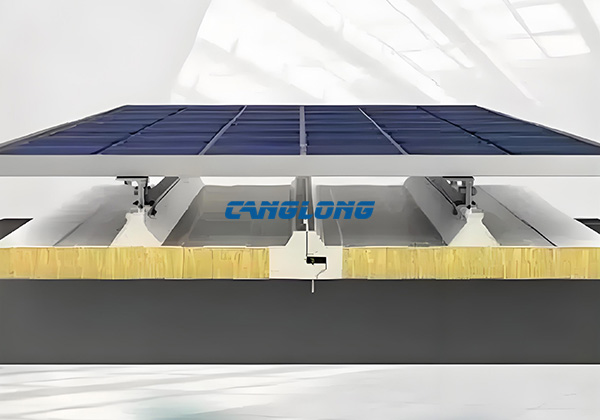
Photovoltaic Roof Panel System
| PRODUCT PARAMETER | |
|---|---|
| Place of Origin: | Henan, China (Mainland) |
| Standard: | GB Standard |
| Certificates: | CE, ISO9001 |
| Brand Name: | Canglong Group |
| Surface Treatment: | Painted & Hot dip galvanized |
| Metal sheet: | steel sheet / aluminum plate / stainless steel |
| Metal sheet thickness: | 0.4~0.8mm |
| Core Material: | PU edge-sealed rock wool / Polyurethane (PU) foam |
| Core Material Thickness: | 50/75/100/150mm (Customizable) |
| Width: | 950mm / 1000mm |
Product Detail
A photovoltaic (PV) roof panel system is a high-performance steel structure building roofing system specifically designed for solar panel installation. By combining roof insulation, waterproofing, and fire resistance with PV installation requirements, it achieves integration of building envelope and green energy utilization.
With the rapid advancement of green building, low-carbon energy, and sustainable development globally, more and more industrial plants, logistics warehouses, and commercial buildings are installing solar photovoltaic (PV) systems. However, traditional roofs often face problems such as insufficient load-bearing capacity, waterproofing damage, and low installation efficiency when installing PV panels.
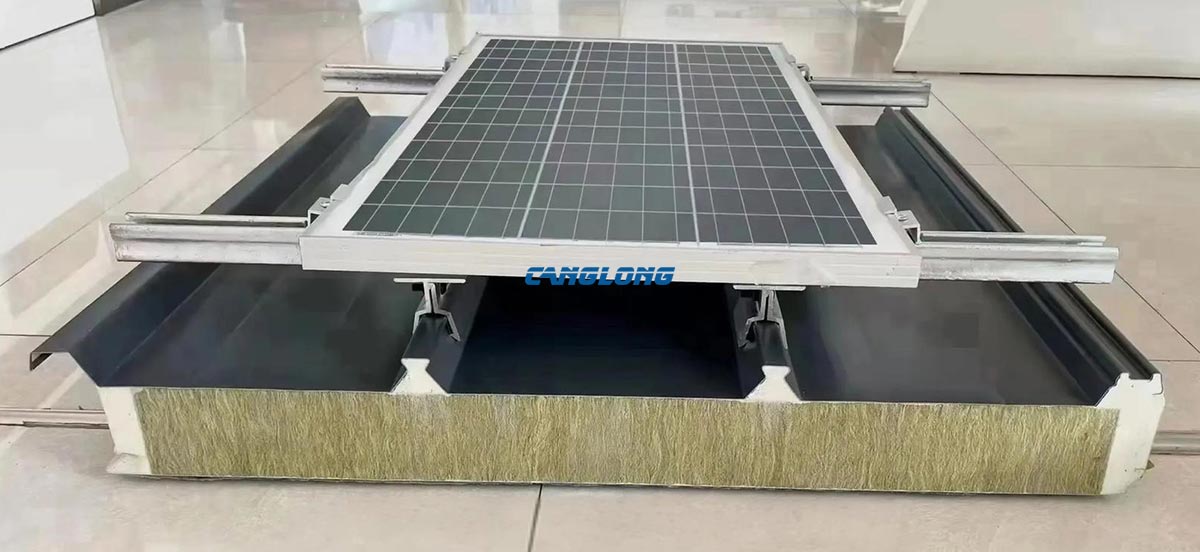
The photovoltaic roof panel system is a new type of building roofing solution developed to address these problems. It perfectly matches the installation requirements of solar panels, providing a safer, more efficient, and durable green energy building system for steel structure plants and warehouses.
What is a Photovoltaic Roof Panel System?
A photovoltaic (PV) roofing panel system is a composite roofing system that combines building roofing with solar energy installation requirements.
It is commonly used in:
- Steel structure factories
- Industrial warehouses
- Logistics centers
- Agricultural buildings
- Commercial buildings
This system serves not only as the building’s roof envelope but also as the base for photovoltaic modules, achieving a four-in-one integration of “building roof + insulation system + waterproofing system + photovoltaic power generation system”.
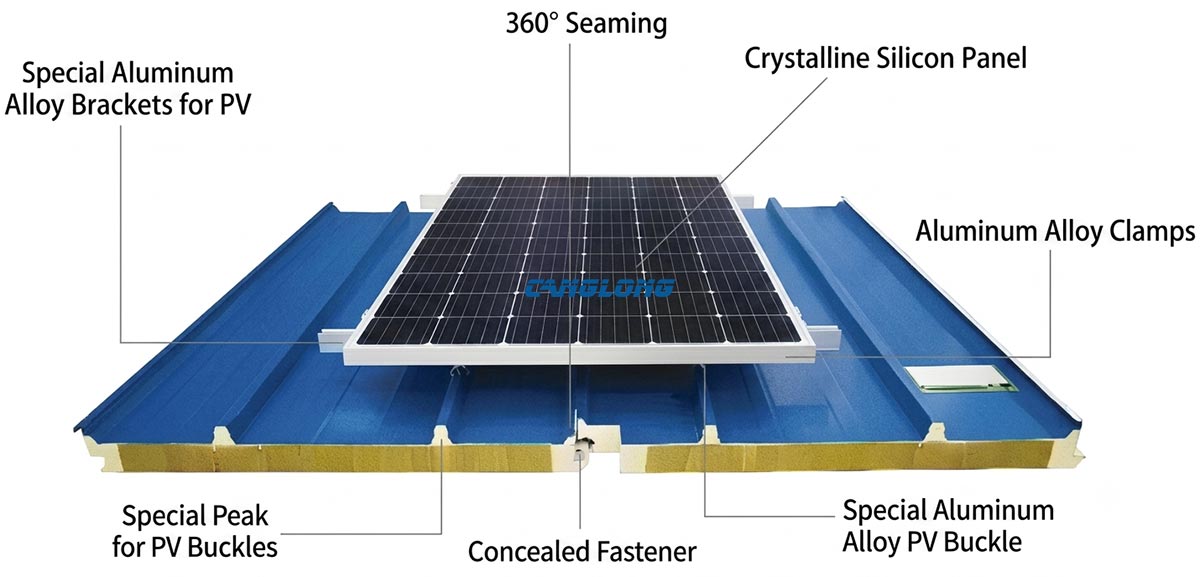
Photovoltaic Roof Panel System Structure
The photovoltaic roof panel mainly consists of the following parts:
1. Outer Metal Panel
Uses:
- Color-coated steel sheet
- Aluminized zinc-plated steel sheet
- High-strength galvanized steel sheet
Main functions:
- Provides structural protection;
- Enhances weather resistance;
- Prevents rainwater intrusion;
- Increases roof lifespan.
2. Insulation Core Material
Depending on different project requirements, the following can be used:
Polyurethane-edged rock wool core material (recommended solution)
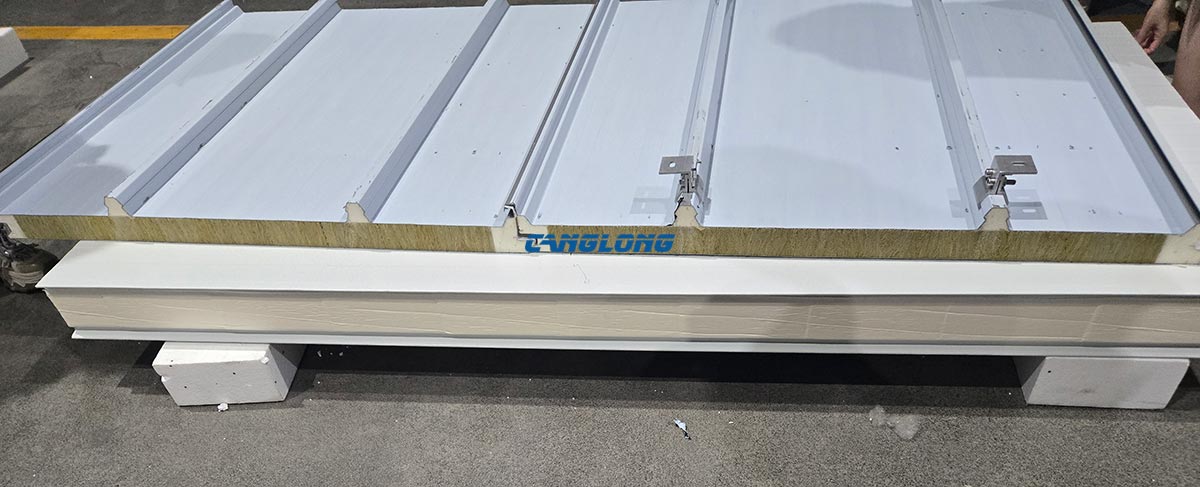
polyurethane-edged rock wool photovoltaic roof panel
Structure:
Steel plate + polyurethane edging + rock wool core material + steel plate
Advantages:
- Class A fire resistance;
- High-strength insulation;
- Excellent moisture resistance;
- Suitable for large industrial buildings.
PU Polyurethane Core Material
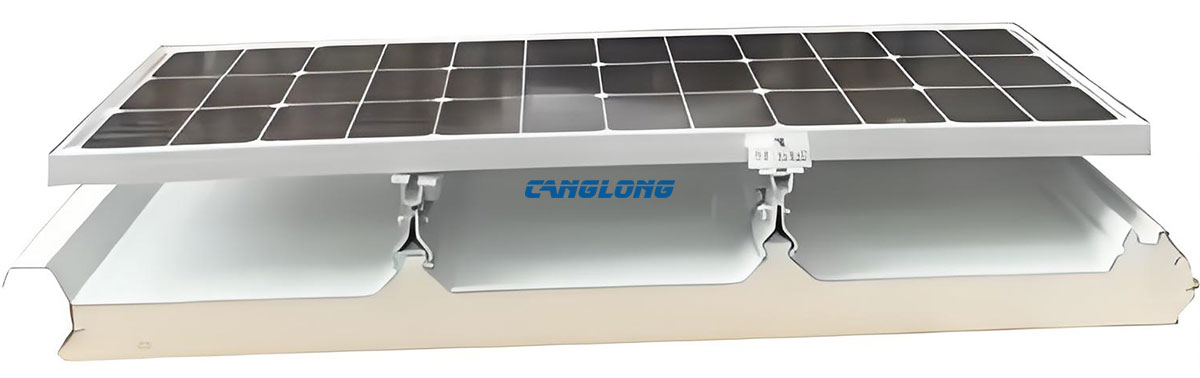
PU polyurethane photovoltaic roof panel system
Structure:
Steel plate + PU foam core material + steel plate
Advantages:
- Excellent thermal insulation performance;
- Low thermal conductivity;
- Lightweight panels;
- Outstanding energy-saving effect.
Suitable for:
- General industrial plants;
- Warehouses;
- Commercial buildings.
3. Photovoltaic Installation Interface System
The photovoltaic roof panel is optimized for solar module installation requirements.
Includes:
- Reserved fixing area;
- Reinforced connection structure;
- Waterproof sealing design;
- Photovoltaic bracket adapter interface.
Ensures:
- Strong installation of photovoltaic modules;
- No damage to the roof waterproofing layer;
- Reduced installation difficulty.
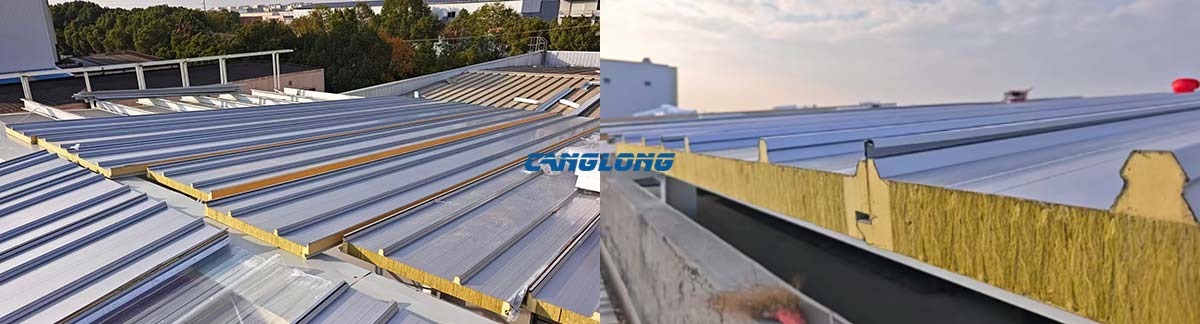
Photovoltaic Roof Panel System Installation
Product Parameters
| Item | Specification |
|---|---|
| Product Name | Photovoltaic Roof Panel System |
| Facing Material | Color-coated steel sheet / Aluzinc steel sheet |
| Core Material Options | PU edge-sealed rock wool / Polyurethane (PU) foam |
| Panel Thickness | 50mm / 75mm / 100mm / 150mm (Customizable) |
| Steel Sheet Thickness | 0.4mm–0.8mm (Customizable) |
| Effective Width | 950mm–1000mm (Customizable) |
| Panel Length | Customized according to project requirements |
| Fire Rating | Rock wool system can achieve Class A non-combustible rating (subject to testing standards) |
| Service Life | More than 50 years (depending on environmental conditions and maintenance) |
| Applications | Industrial factories, warehouses, logistics centers, commercial buildings |
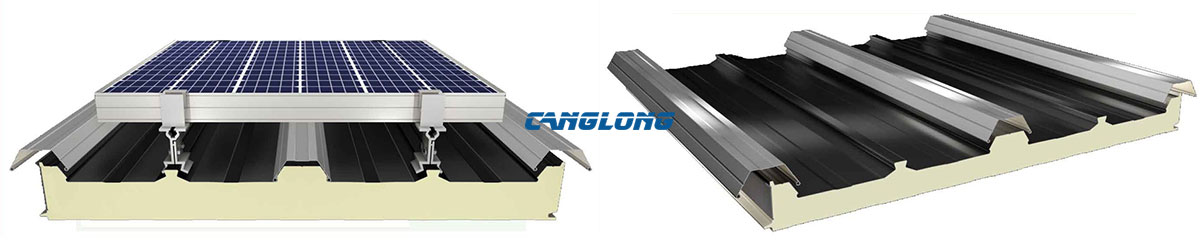
Polyurethane Photovoltaic Roof Panel System Overlap
Core Advantages of the Photovoltaic Roof Panel System
1. Perfectly Adaptable to Solar Photovoltaic Systems
Traditional rooftop photovoltaic panel installation requires additional support structures, which may affect roof performance.
The photovoltaic roof panel system considers in advance:
- Photovoltaic load;
- Installation method;
- Waterproof joints;
- Structural connections.
Achieve a perfect integration of building rooftops and photovoltaic systems.
2. Enhanced Waterproofing Performance
One of the biggest risks of photovoltaic installation is damaging the roof’s waterproofing.
- This system employs:
- Optimized panel design;
- Sealed connection method;
- Dedicated installation interface;
Reducing the risk of drilling and roof damage, improving long-term waterproofing capabilities.
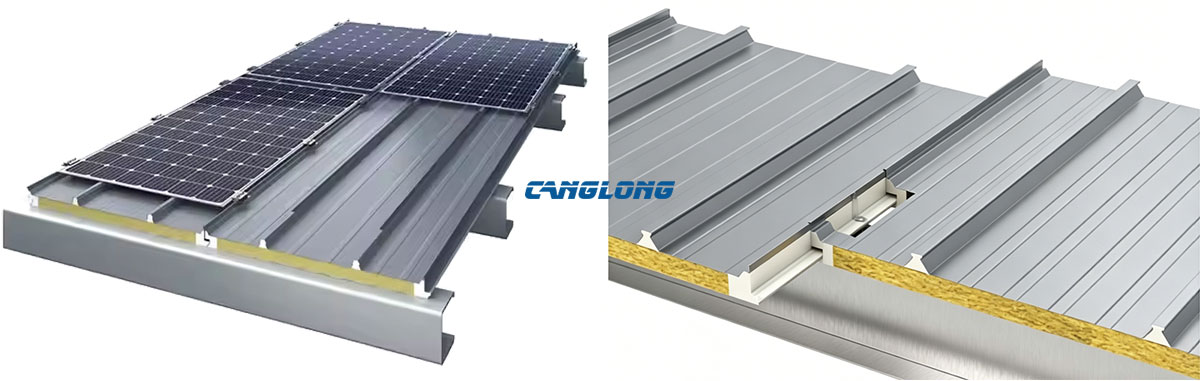
polyurethane-edged rock wool core photovoltaic roof panel overlap
3. Excellent Thermal Insulation Performance, Lowering Energy Costs
For industrial plants, the roof area is typically large.
High-performance core materials can:
- Reduce indoor heat exchange;
- Reduce air conditioning operating costs;
- Improve employee comfort;
- Enhance building energy efficiency.
Particularly suitable for:
- High-temperature regions of Southeast Asia;
- The Middle East;
- Cold regions of Europe.
4. High Fire Safety Rating
When using polyurethane-sealed rock wool solutions:
- The rock wool core material is non-combustible;
- Excellent fire resistance;
- Meets the requirements of high-safety-level buildings.
Suitable for:
- Food processing plants;
- Pharmaceutical factories;
- Electronics manufacturing plants;
- Large-scale warehousing projects.
5. Fast Installation
PV roof panels feature a modular design:
- Factory prefabrication;
- Rapid on-site installation;
- Reduced construction steps;
- Lower labor costs.
Combined with steel structure buildings, it enables:
Steel structure installation → Roof installation → PV installation
Rapidly completing the entire building energy system construction.
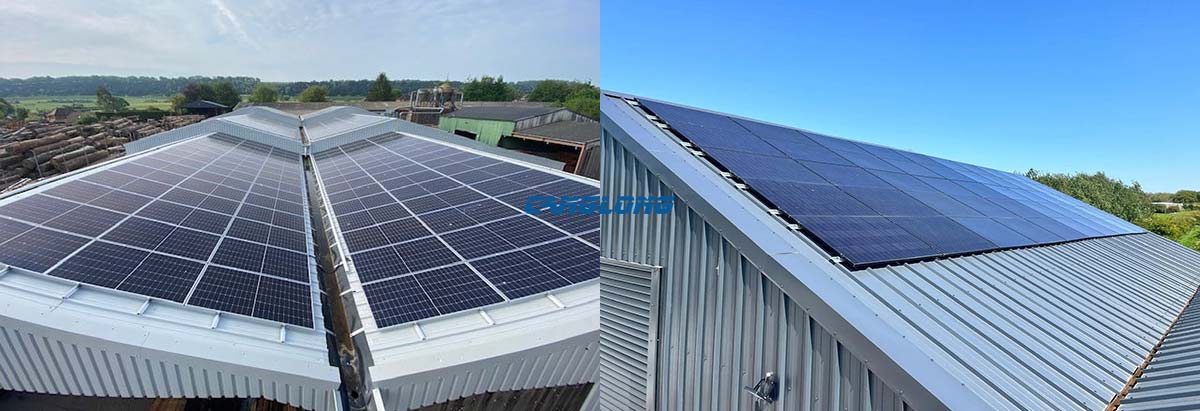
Applicable Project Areas
PV roof panel systems are widely used in:
- Industrial Manufacturing
- Automotive Factories
- Machinery Manufacturing Plants
- New Energy Factories
- Warehousing and Logistics
- Smart Logistics Centers
- E-commerce Warehouses
- Distribution Centers
- Agricultural Buildings
- Agricultural Warehouses
- Livestock Buildings
- Agricultural Product Processing Plants
- Commercial Buildings
- Commercial Centers
- Exhibition Halls
- Sports Buildings
Why are more and more buildings choosing PV roof panels in the future?
With rising global energy costs and continuously upgrading green building standards, companies are increasingly focusing on:
- Reducing operating costs;
- Improving energy efficiency;
- Reducing carbon emissions;
- Enhancing building value.
PV roof panel systems are not just a building material, but also an integrated building energy solution. It helps businesses utilize idle rooftop space, transforming buildings into green energy assets.
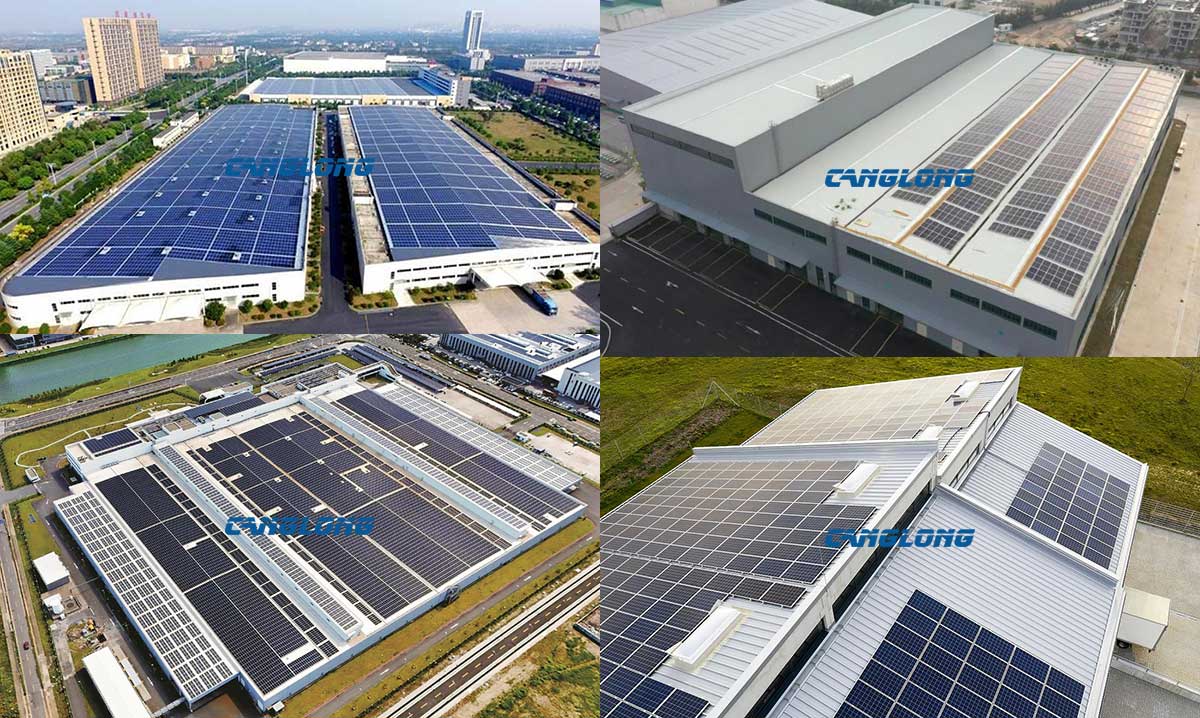
Conclusion
Photovoltaic roof panel systems combining high-performance sandwich roof structures with solar installation requirements, offer a safer, more efficient, and energy-saving roofing solution for modern steel structure buildings.
Whether it’s polyurethane-sealed rock wool photovoltaic roof panel or PU polyurethane photovoltaic roofing panels, they can be customized to suit different national climates, building standards, and energy needs.
Canglong Group provides global clients with complete steel structure building and photovoltaic roofing solutions, from steel structure design and roofing system supply to installation technical support, helping clients create more energy-efficient, durable, and future-oriented green buildings.