How to choose the right core material for insulation sandwich panels?
In the global wave of industrialized construction and green energy conservation, insulation sandwich panels, with their advantages of being lightweight, high-strength, and easy to install, have become a core enclosure material for industrial plants, cold chain logistics, and public buildings. Data from 2025 shows that the global market size for exterior wall sandwich panels has reached $12 billion, with the Asia-Pacific region contributing over 40% of the growth. However, many projects have experienced insulation failures and fire hazards due to incorrect core material selection. As the “core” of the sandwich panel, the core material directly determines its safety performance and usability. Choosing the right core material is essentially matching the building with the most suitable “life gene.”
I. Analysis of the Advantages and Disadvantages of Six Core Categories
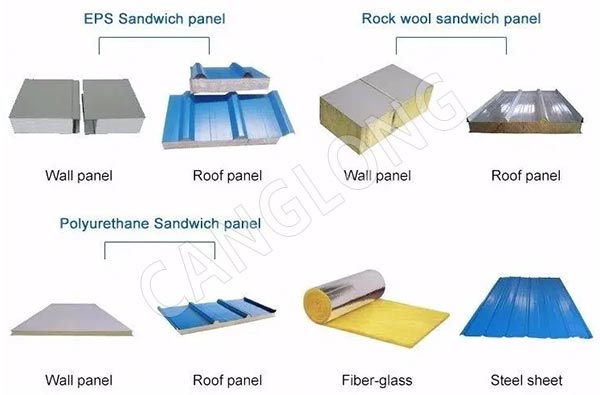
The current global market for insulation sandwich panel core materials has formed a diverse landscape, ranging from traditional foam to nanocomposite materials. Different core materials have different focuses in terms of insulation, fire resistance, and environmental protection. The following is a comprehensive comparison based on the latest technical parameters and application scenarios in 2025:
1.1. Rock Wool (RW)
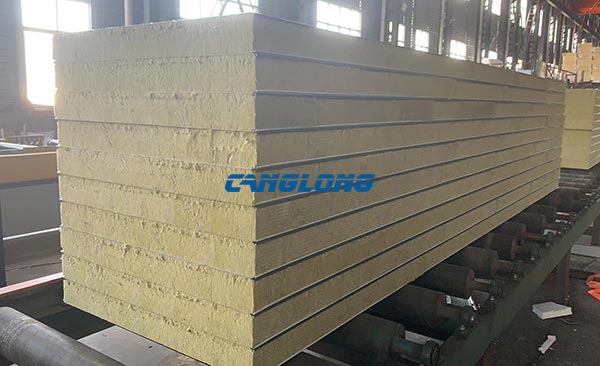
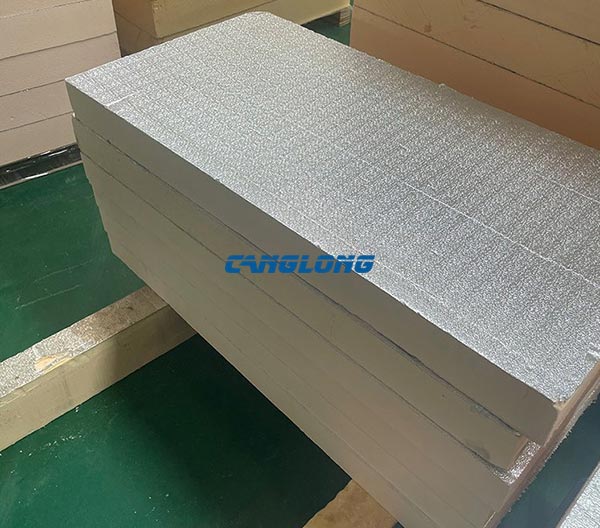
As a mainstream choice for public buildings, rock wool core material is made from basalt through melt fiberization, with a density of 80-200 kg/m³. Its most prominent advantage is its Class A non-combustible performance, with a fire resistance limit of up to 4 hours and a temperature resistance exceeding 1000℃. It maintains structural integrity during a fire, fully complying with the stringent requirements of China’s “Code for Fire Protection Design of Buildings” and the EU standard EN14509 for densely populated areas.
Regarding performance shortcomings, rock wool has a thermal conductivity of approximately 0.035-0.045 W/(m·K), resulting in slightly lower insulation efficiency compared to organic core materials. Furthermore, its water absorption rate exceeds 98%, requiring strict moisture-proofing in humid regions of Southeast Asia or underground projects. During construction, the fibers are prone to breakage, generating dust, necessitating specialized protective equipment. Typical applications include firewalls in European hospitals, explosion-proof walls in Chinese chemical plants, and secure isolation areas in global data centers.
1.2. Polyurethane (PU/PIR)
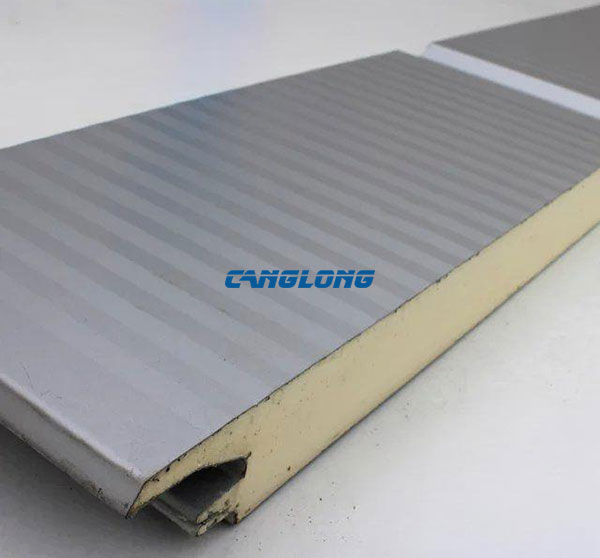
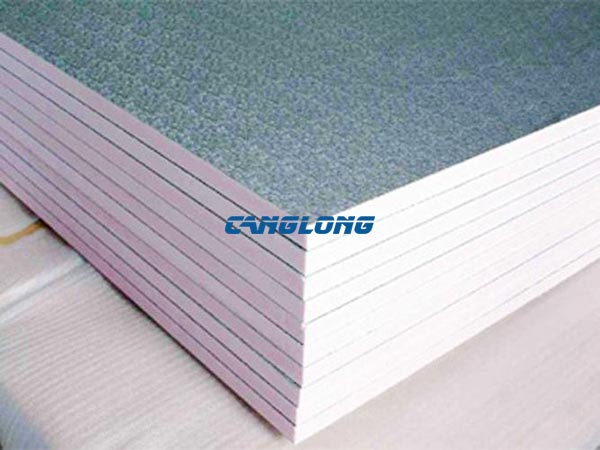
Polyurethane core materials achieve a balance between insulation and strength through their cross-linked network structure. Their thermal conductivity is as low as 0.018-0.024 W/(m·K), and their insulation performance is twice that of traditional EPS. A breakthrough in fluorine-free foaming technology in 2023 reduced its ozone depletion potential (ODP) to zero, solving the problem of environmental regulations in Europe and the United States. Currently, its penetration rate in the global cold chain logistics sector has reached 41%.
Flame-retardant PU core materials can reach B1 rating. During combustion, they form a carbonized layer that isolates oxygen. With a compressive strength of 150-300 kPa, they can support light equipment and are ideal for pharmaceutical cleanrooms, food cold storage, and other similar applications. Market data from 2025 shows that it will account for 38% of the Chinese market and is a mainstream choice in high-end buildings in Europe and the United States. The newly launched self-healing PU core material can self-heal micro-cracks within 48 hours, further extending its service life.
1.3. Polystyrene (EPS/XPS)
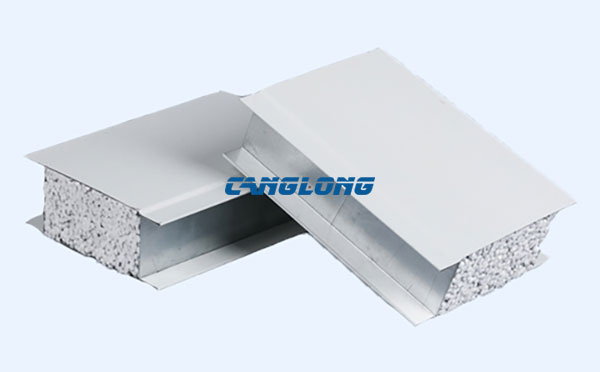
Polystyrene core materials are divided into EPS (expandable polystyrene) and XPS (extruded polystyrene). XPS, due to its optimized closed-cell structure, has a water absorption rate of ≤0.3%, superior compressive strength, and a thermal conductivity of approximately 0.028-0.035 W/(m·K). This type of core material has a density of only 10-30 kg/m³, and its cost is more than 30% lower than PU, making it suitable for temporary warehouses, market sheds, and other non-densely populated areas.
Its fatal flaw is its weak fire resistance. Ordinary EPS is a B2-class flammable material. Even after flame-retardant treatment to achieve a B1 class, it will still shrink and melt upon exposure to fire, releasing toxic styrene gases. Therefore, its use in high-rise buildings and public buildings is restricted in the EU’s Near Zero Energy Building Directive and China’s GB8624-2012 standard. In cost-sensitive regions such as Africa and Southeast Asia, EPS core materials still hold a certain market share, but require comprehensive fire-resistant partitioning measures.
1.4. Phenolic Resin (PF)
Phenolic core materials are made from the condensation polymerization of phenol and formaldehyde, containing a large number of aromatic ring structures. They achieve a fire resistance rating of A2 (quasi-non-combustible) and a smoke density rating (SDR) < 5, releasing almost no toxic gases in a fire. Their thermal conductivity is 0.022-0.030 W/(m·K), and they remain stable in acidic or alkaline environments with a pH range of 2-12, making them particularly suitable for special applications such as ship cabins and underground utility tunnels.
Traditional phenolic core materials suffer from free formaldehyde release issues. However, in 2024, a breakthrough was achieved in bio-based phenolic technology, using lignin to replace some of the phenol, reducing formaldehyde release to below 0.1 mg/m³, meeting global environmental standards. However, their brittleness and tendency to pulverize remain unresolved, limiting their large-scale application in ordinary buildings.
1.5. Glass Wool (GW)
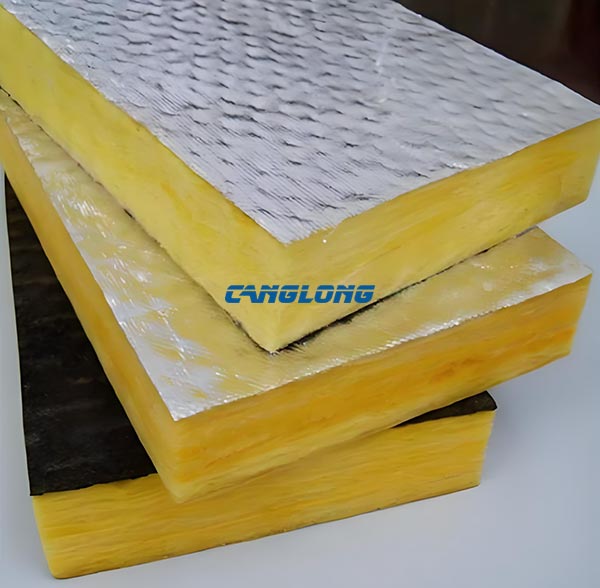
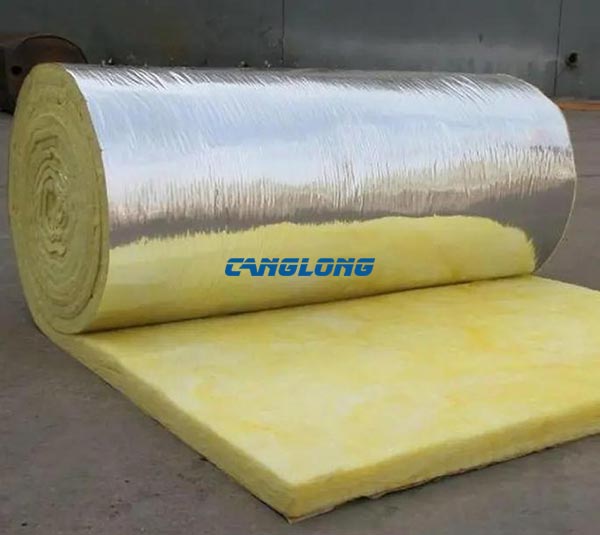
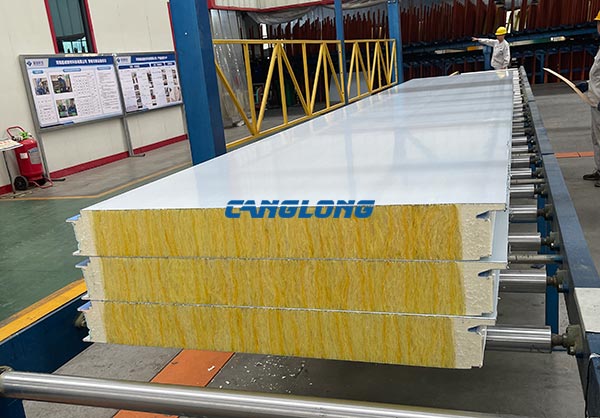
Glass wool core material is made of ultra-fine glass fibers, only 3-8 μm in diameter. It has a sound absorption coefficient of 0.8-1.0 in the 500-2000Hz frequency range sensitive to human hearing, and a vibration attenuation rate exceeding 90%, making it an ideal choice for noise control. Compared to rock wool, its water repellency is >99%, performing better in the hot and humid regions of Southeast Asia.
However, glass wool has a compressive strength of only 50-80 kPa, and long-term use can lead to fiber pulverization, requiring the use of sealing panels. Globally, glass wool sandwich panels are widely used in soundproof walls of high-speed railway stations and precision electronics workshops. In applications in German automotive parts factories, it reduced workshop noise from 85 dB to below 50 dB, significantly improving the quality of the production environment.
1.6. Aerogel Composite Materials
As a representative of fourth-generation core materials, aerogel uses a three-dimensional silica network as its framework, with a porosity exceeding 99% and a thermal conductivity as low as 0.013-0.016 W/(m·K), offering five times the thermal insulation performance of traditional materials. Its compressive strength reaches 1.2 MPa, capable of withstanding the impact of a small car, and it exhibits a hydrophobic angle >150°, preventing oil penetration. It is indispensable in cutting-edge fields such as spacecraft insulation and LNG cryogenic storage tanks.
Currently, its application bottleneck is mainly cost, exceeding 2000 yuan per square meter, ten times the cost of PU panels. However, a 2025 industry report shows that with the advancement of large-scale production, the penetration rate of aerogel composite sandwich panels in ultra-low energy consumption buildings globally has increased from 1% to 3%. After its adoption in a cold chain logistics park in China, cold storage energy consumption decreased by 22%, demonstrating significant long-term economic benefits.
II. General Selection Guide
Different countries and regions have significantly different climates, regulations, standards, and application scenarios. Selecting the right core material requires a logical framework prioritizing the application scenario, matching performance, adhering to compliance, and controlling costs. The following four dimensions cover the vast majority of global needs:
2.1. Climate Adaptability
In cold-climate regions such as Northern Europe and Canada, core materials with high insulation efficiency should be prioritized. PU and aerogel composite panels can reduce insulation layer thickness and lower building load. In tropical and subtropical regions such as Southeast Asia and the Middle East, both insulation and moisture resistance are necessary. XPS and water-repellent glass wool are more suitable to prevent moisture absorption by the core material, which can lead to insulation failure. In temperate continental climates such as northern China, with harsh winters and hot summers, PU and rock wool composite core materials (PU + rock wool) can achieve energy savings in both winter and summer. Currently, this type of composite panel accounts for 15% of the Chinese market.
In coastal regions such as Japan and the west coast of the United States, the impact of salt spray corrosion on the core material needs to be considered. It is recommended to choose anti-corrosion treated rock wool or PU core materials, and ensure that the panel has a fluorocarbon (PVDF) coating to extend its service life.
2.2. Regulatory Compliance
Fire safety regulations are a strict constraint on the selection of core materials globally. The EU requires high-rise buildings to use core materials that meet the A2 non-combustible standard, with rock wool and phenolic resins being the mainstream. California, USA, due to frequent forest fires, mandates that exterior wall materials have a fire resistance rating of ≥2 hours, and flame-retardant PU must pass the UL94 vertical burning test. China’s GB8624-2012 standard clearly states that hospitals, schools, and other densely populated places must use A-grade non-combustible core materials, with rock wool accounting for over 42%.
Regarding environmental regulations, the EU’s REACH restricts the use of high GWP (Global Warming Potential) foaming agents, promoting the widespread use of fluorine-free PU core materials. Under China’s “dual-carbon” policy, carbon emission data for core materials is included in green building evaluation, and environmentally friendly core materials such as bio-based phenolic resins and recyclable PU receive policy support. When purchasing, it is necessary to proactively verify the product’s CMA fire resistance test report, CE certification, or UL certification documents to avoid compliance risks.
2.3. Scenario Functionality
Industrial plants require differentiation based on production type: high-temperature workshops, such as metallurgical plants, should prioritize rock wool core materials. Precision electronics workshops require a balance between sound insulation and cleanliness. Glass wool sandwich panels combined with sealing technology can achieve a Class 10,000 cleanroom standard. Food processing workshops require moisture-proof and antibacterial properties; PU core materials with a closed-cell rate of ≥95% effectively prevent mold growth.
In the logistics and warehousing sector, EPS/XPS can be used for general warehouses to control costs. Cold chain logistics centers must choose PU or aerogel core materials to ensure stable insulation performance at -20℃. Hazardous materials warehouses require Class A non-combustible rock wool core materials that comply with local explosion-proof regulations.
In public buildings, rock wool and phenolic resin are preferred for hospitals and schools. For places with acoustic requirements, such as high-speed rail stations and concert halls, glass wool core materials are the best choice. High-end commercial buildings pursue energy conservation and aesthetics; concealed-edge PU sandwich panels can be combined with personalized panels to achieve a unity of architectural aesthetics and performance.
2.4. Cost Balance
Core material selection should not only consider the purchase price but also calculate the total life cycle cost. Taking a 10,000㎡ industrial plant as an example, the procurement cost of EPS core material is $30,000 lower than that of PU, but its poor insulation performance leads to an annual energy consumption increase of $12,000, resulting in a total cost increase of $90,000 over 10 years. If located in areas with high fire safety requirements, EPS requires additional fireproof partitions, further increasing costs.
When purchasing, it is recommended to prioritize regional suppliers. For example, Rockwool rock wool boards are used in Europe, while Canglong PU boards are used in China, which can reduce cross-border transportation costs by 15%-20%. At the same time, pay attention to the durability of the core material. Rock wool and PU core materials have a service life of up to 25 years, 1.5 times that of EPS, making them more economical in the long run.
III. Latest Industry Trends
The global insulated sandwich panel industry is undergoing technological innovation by 2025. Core material selection should follow three major trends:
First, environmental friendliness. The ODP value of core materials such as fluorine-free PU and bio-based phenolic resins has dropped to 0, meeting global carbon neutrality goals. These products have already exceeded 30% market share in Europe and the United States.
Secondly, there’s the trend towards high performance. Composite panels combining aerogel with traditional core materials (such as aerogel + rock wool) retain fire resistance while improving insulation efficiency, becoming standard in ultra-low energy consumption buildings.
Thirdly, there’s functional integration. New products like self-healing PU and photovoltaic integrated sandwich panels achieve multiple functions, including insulation, power generation, and maintenance, reshaping the value system of building materials.
Conclusion
From EPS foam in the 1960s to today’s aerogel composite materials, the evolution of core materials reflects humanity’s search for a balance between safety, energy conservation, and environmental protection. For users, there is no absolutely best core material, only the most suitable choice. Maintaining the essential insulation properties in cold climates, ensuring moisture resistance and weather resistance in tropical regions, providing a solid fire safety foundation in public buildings, and matching functional requirements in industrial settings are all crucial. With technological advancements, future core materials will be more intelligent and environmentally friendly. Understanding the core logic of performance matching is essential to ensuring that every insulation sandwich panel becomes a reliable cornerstone of a building.