How the steel building supply chain is adapting in 2026?
With the potential dramatic shift in the US tariff framework and trade policies in 2025, the global steel building supply chain officially enters a period of profound transformation in 2026.
For global cross-border construction traders, steel structure general contractors, and multinational industrial investors, the traditional linear logistics model of manufacturing in a single country and directly exporting to the US is becoming ineffective. How to maintain the resilience of the supply chain under the pressure of tariff barriers, anti-dumping/countervailing duty (AD/CVD) laws, and carbon tariffs is a pressing issue that cannot be avoided.
The following is an analysis of the in-depth technical trends and practical paths for the adjustment of the global steel building supply chain in 2026.
Core Challenges of US Trade Policy in 2026
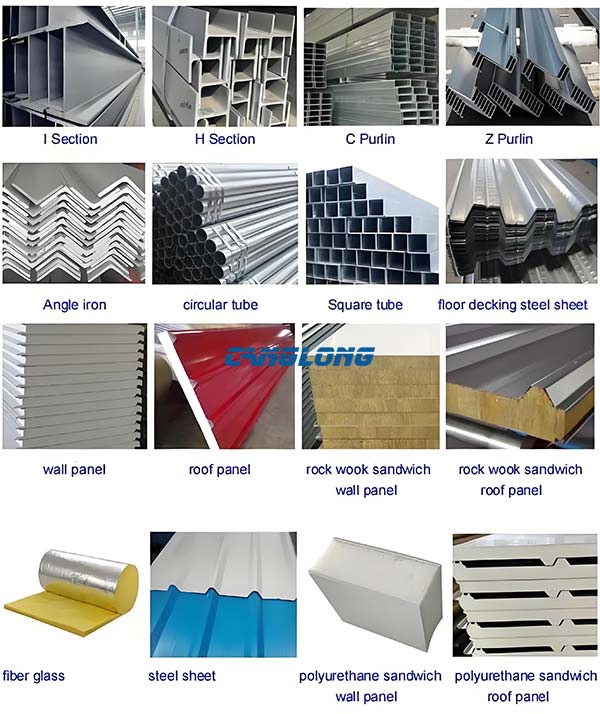
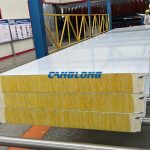
Entering 2026, US restrictions on imported steel structures (H-beams and columns, C/Z-beam purlins) and cladding systems (PU/rock wool sandwich panels) will no longer be limited to traditional tariff rates, but will evolve into multi-dimensional barriers.
Upgraded Rules of Origin: Anti-circumvention reviews in 2026 will be extremely stringent. The US will not only trace the final assembly location of the steel structure, but also trace the country of origin for the smelting and pouring of crude steel through a digital customs clearance system. Any attempt to “launder” the country of origin through simple entrepot trade will face hefty traceability penalties.
Supply Chain Compliance (ESG and Carbon Tariff Trends): In addition to traditional tariffs, green and low-carbon indicators are becoming new types of trade barriers. Building materials that fail to provide internationally recognized Environmental Product Declarations (EPD certification) or whose embedded carbon emissions exceed standards throughout their entire lifecycle are facing stricter scrutiny and potential carbon tax costs during customs clearance in North America.
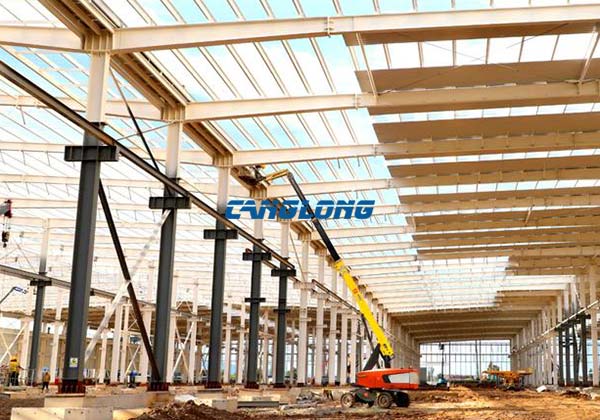
Steel Building Kits
Three Breakthrough Strategies for the Steel Construction Supply Chain
Faced with uncontrollable policy risks, leading global steel structure integrators and cross-border traders are undertaking comprehensive supply chain decoupling and restructuring through the following three methods:
1. Supply Chain Diversification and Overseas Production Base Layout
The risks of relying solely on a single domestic manufacturing base for exports to the US are being mitigated by a globalized layout.
Nearshore and Multi-Point Manufacturing: Leading companies in the industry are beginning to establish joint processing centers in Southeast Asia (such as Vietnam, Thailand, and Malaysia) or Mexico, and Central and Latin America, or to build multi-point supply chain networks through strategic OEM manufacturing.
Cross-border Resource Optimization: Leveraging China’s strong BIM design capabilities, intelligent robotic welding technology, and mold advantages for front-end development, and then conducting localized steel procurement, CNC punching, and foaming of cladding panels at compliant overseas bases. This approach aligns with US Customs’ country-of-origin compliance standards while preserving the high-efficiency turnover benefits of Chinese technology.
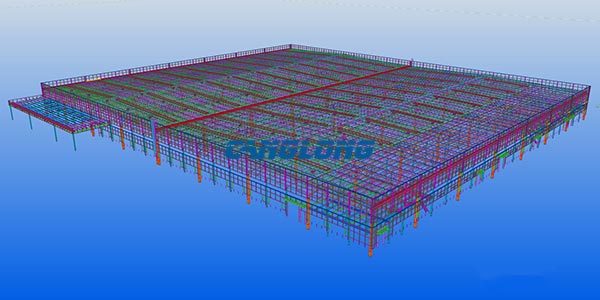
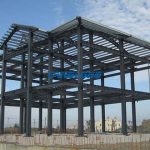
Steel Building Design
2. Upgrading from Exported Raw Materials to High-Value-Added One-Stop Kits
Ordinary hot-rolled H-beams and color-coated steel sheets are easily included in the commodity penalty list, while highly integrated modular building kits, due to their high technical barriers and engineering specificity, often possess stronger bargaining power and exemption space in tariff negotiations.
Modular Delivery: The main steel structure, secondary structure, high-quality polyurethane (PU) edge-sealed rock wool panels, gutters and downpipes, flashing, and even all high-strength bolts are 100% precisely prefabricated and marked before leaving the factory.
Offsetting Tariffs with Efficiency: Once these one-stop kits arrive at the US site, 100% on-site welding and cutting are unnecessary. Although customs clearance may incur some tariffs, on-site construction can be halved, saving US clients over 50% on expensive local construction labor costs, thus perfectly offsetting the price premium from tariffs in the overall CAPEX.
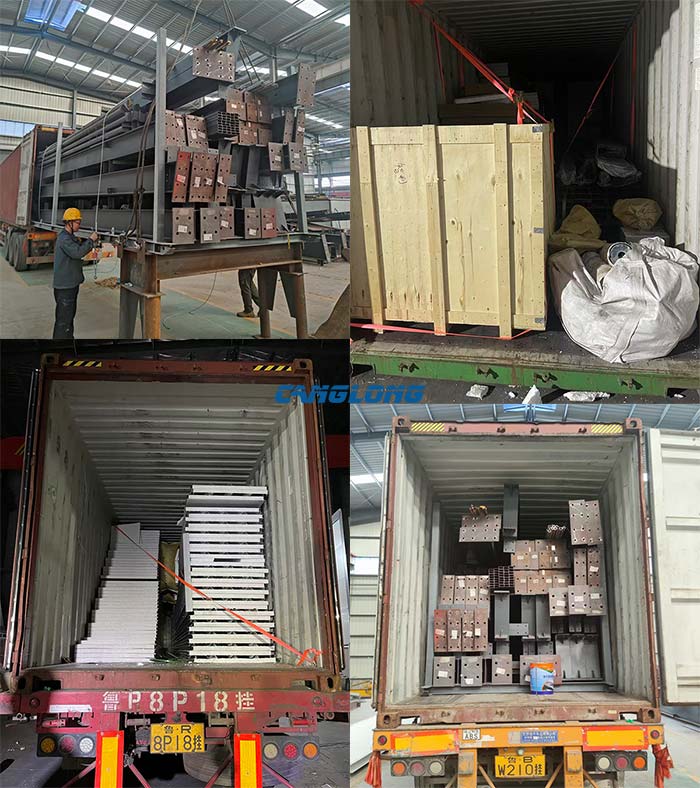
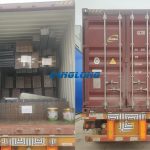
Steel Building Kit Packaged and Shipped
3. Fully Digital Supply Chain and Full Compliance Certification Chain
In 2026, the quality of compliant documentation is just as important as the quality of the product itself in cross-border trade.
Certification and Customs Clearance: Steel construction exporters must fully align with the highest North American public safety and material standards, including US building codes, ASTM standard testing, AISC (American Institute of Steel Construction) manufacturing certification, and international third-party compliance certificates for cladding materials (such as SGS, ISO).
Transparent Tracking: Utilizing BIM technology combined with barcode/RFID systems, a fully digital traceability system is achieved from raw material furnace number at the steel mill, factory robotic welding, assembly testing to container loading, providing customs with an impeccable and transparent supply chain evidence chain for unimpeded customs clearance.
Canglong Group’s 2026 Global Compliant Delivery
As a system integrator with extensive experience in high-standard delivery in North America and global markets, Canglong Group demonstrates a model of supply chain adjustment for 2026 to global clients through its highly certain overseas expansion closed loop.
Full-chain Solution Management: Canglong not only possesses the capability for in-depth design of solutions aligned with US standards, but also extends its services to booking ocean freight, handling all customs clearance and documentation, and providing remote 3D installation guidance. A professional multinational legal and logistics team helps clients mitigate the hidden risks of customs detention or secondary tariffs at the destination port.
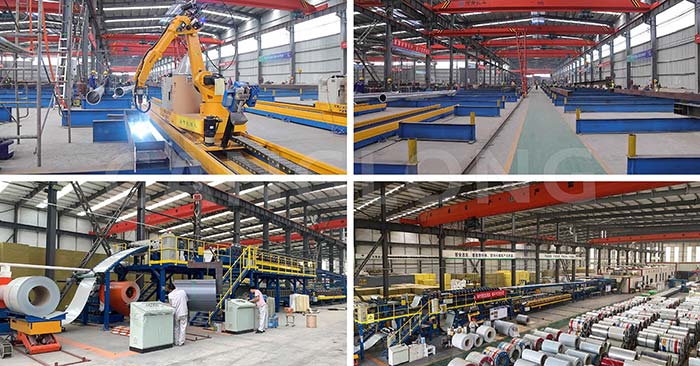
Lean Manufacturing to Offset Costs: Canglong utilizes continuous fully automated hot pressing production lines and intelligent welding robots to maximize product geometric precision and production speed. The on-site bolt-installation feature allows North American clients to enjoy extremely high business turnover and a very short construction window even in a market environment with fluctuating tariffs.
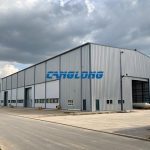
Canglong Steel Building Production Workshop
Conclusion
Trade policies may shift, but the rigid demand of global industry and commerce for high-speed, low-energy-efficiency, and long-life buildings will never change. In 2026, only those companies with global multi-point supply chain coordination capabilities, international authoritative compliance certifications, and the ability to help customers cut project time in half through one-stop full-package delivery will be able to weather the storm of tariffs and build the strongest business fortress.