How to choose a prefab building steel structure supplier?
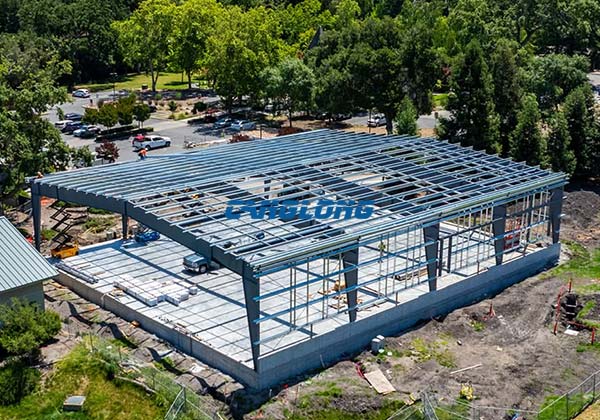
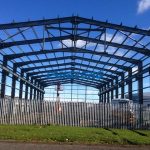
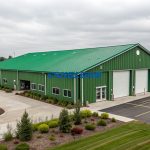
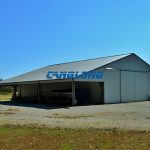
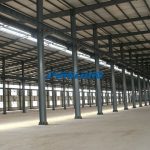
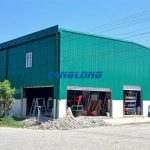
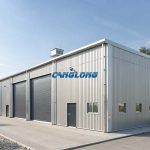
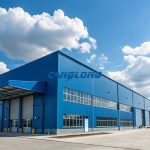
For factories, warehouses, logistics centers, workshops, aircraft hangars, and agricultural buildings, prefab steel structure allow for the prefabrication of numerous components in a factory, followed by on-site assembly.
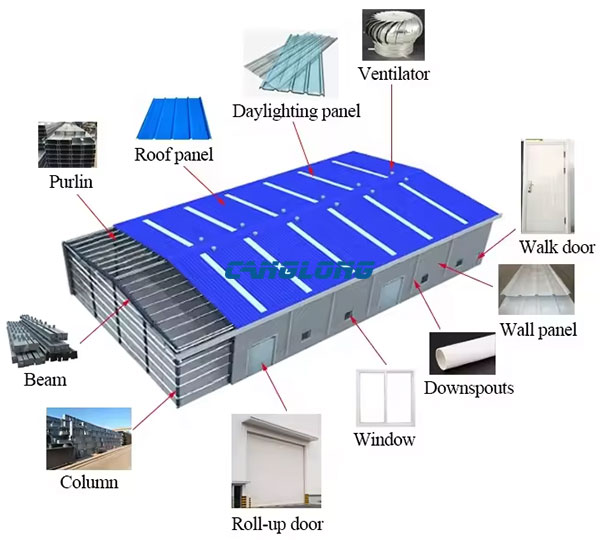
This “factory prefabrication + on-site installation” model reduces on-site processing and improves construction efficiency. The MBMA (Metal Building Management Association) defines modern metal building systems as a holistic system comprised of a main steel frame, purlins/wall beams, and roof and wall cladding.
However, for overseas buyers, the real challenge is often not “where to buy steel structures”. But rather “how to determine if a prefab building steel structure supplier is truly suitable for my project.”
1. Assess the Supplier’s Engineering Design Capabilities
Prefab steel structures are not simply about producing steel according to building dimensions. Suppliers need to design and optimize the structure based on the building’s intended use, dimensions, wind loads, snow loads, seismic requirements, roof loads, crane loads, and local building codes.
Mature metal building systems are typically custom-designed based on the building’s intended use, applicable codes, load conditions, and performance requirements. Therefore, when procuring, suppliers should be required to provide “structural calculations → design drawings → detailed drawings → component list → fabrication drawings,” not just a steel quotation.
2. Visit the factory, not just the company website
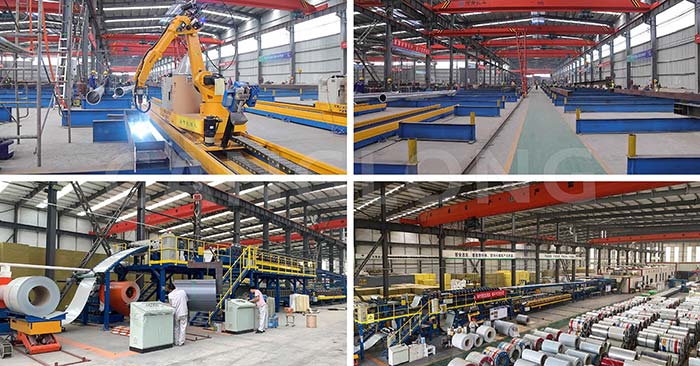
For prefab building steel structure, manufacturing capabilities directly impact the final installation efficiency and quality. Key areas to examine include:
Steel cutting equipment
Automatic welding equipment
CNC machining equipment
Sandblasting/shot blasting equipment
Painting equipment
Quality inspection process
Component numbering system
Production and delivery capabilities
One of the advantages of modern prefab building is that major components are processed in a controlled factory environment before being transported to the site for assembly. Therefore, if possible, factory audits are often more valuable than simply comparing online claims.
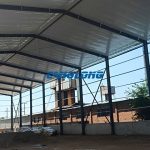
Canglong Production Workshop
3. Check the quality system and relevant certifications
This is especially important for overseas projects. For example, in the US market, relevant certification systems such as AISC are worth considering. AISC states that its certification system assesses a company’s personnel, organization, experience, documented processes, equipment, and quality management capabilities.
For European projects, it’s necessary to further confirm whether the products and project meet applicable European standards and regulations. EU building product regulations establish a unified performance evaluation framework and involve requirements such as performance declarations and CE marking.
Therefore, don’t just ask “do you have certificates?”. Instead, ask “Which standards and certifications are applicable to my project, and can you provide the corresponding documents?”
4. Don’t just compare steel prices, compare the complete building system
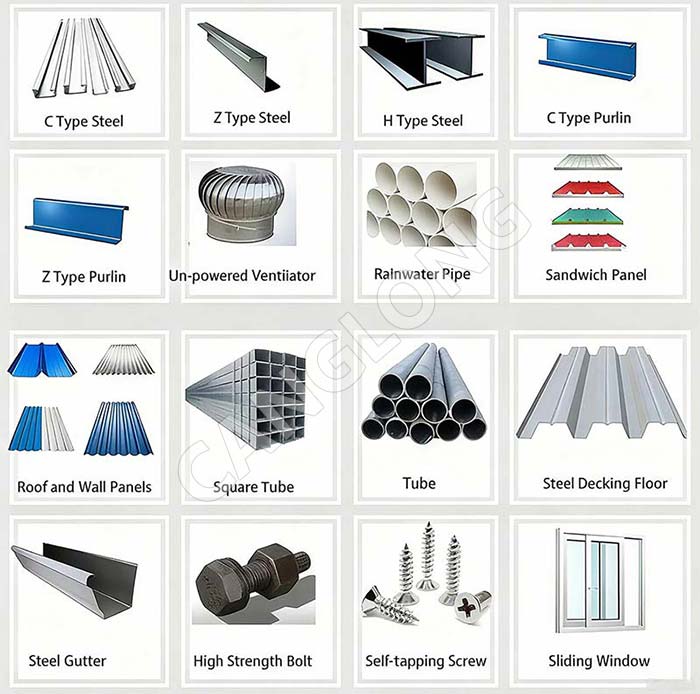
A complete prefab steel building typically includes more than just H-beams and columns. It may also include:
C/Z-shaped purlins
Wall beams
Roofing system
Wall system
Sandwich panels
Doors and windows
Gutters and downpipes
Supporting system
Fasteners
Flashing
Insulation materials
Therefore, even if two suppliers offer similar prices per ton of steel, the final project price may differ significantly. When purchasing, compare “Structural Steel + Enclosure + Accessories + Packing + Shipping + Installation Support”. Instead of just comparing the price per ton of steel.
5. Check if the supplier can design according to local conditions
Prefab building is not sold as a single design to all countries. For example:
US projects may need to consider local building codes, wind loads, and seismic requirements;
European projects need to focus on applicable European standards and product compliance;
Australian projects need to be designed according to local regulations and climate conditions;
African, Latin American, and Southeast Asian projects may focus more on high temperatures, strong winds, heavy rain, corrosion, and transportation conditions.
Therefore, a supplier with genuine overseas project experience should be able to customize designs based on “Country + Location + Building Use + Local Loads + Applicable Codes”.
6. Overseas procurement also requires considering packaging and transportation capabilities
For international projects, “production completion ≠ project delivery completion”. A large number of steel components need to go through “production → numbering → packaging → container loading → sea freight → customs clearance → on-site unloading → installation”. Problems in any of these stages can affect the project schedule.
Especially for large steel structure projects, if components are not properly numbered and packaged, significant time may be spent on-site searching, moving, and counting them. Therefore, it’s essential to confirm with the supplier in advance:
How to number them?
How to package them?
How many can be packed in one 40HQ container?
Are container photos provided?
A packing list provided?
Are installation drawings provided?
How to guide on-site unloading and installation?
These details often reflect a supplier’s project management capabilities more than the unit price of steel alone.
7. Focus on installation support, not just production capabilities
Overseas steel structure projects often face the problem that “the supplier is in China, but the project is thousands or even tens of thousands of kilometers away.” Therefore, can the supplier provide:
Installation Drawings
Installation Manual
Component Numbering
Remote Technical Support
Installation Guidance
On-site Engineer Support
A complete prefab steel building supply chain should, as far as possible, achieve “Design → Fabrication → Packing → Shipping → Installation Support”. This reduces the difficulty for clients in coordinating multiple suppliers on-site.
8. The final comparison should be based on overall value
When selecting a prefab building steel structure supplier, the following simple framework can be used:
Comparison Category
What to Look For
Engineering
Local building codes, structural calculations, detailed design
Manufacturing
Factory equipment, production capacity, manufacturing processes
Quality
Raw materials, welding, dimensions, coating, inspections
Building System
Steel structure, roofing, wall systems, and accessories
International Experience
Overseas projects and export experience
Logistics
Packing, container loading, shipping, and documentation
Installation
Installation drawings, technical guidance, on-site support
Cost
Materials, transportation, installation, and long-term maintenance
Conclusion
For clients, the value of a prefab building steel structure supplier goes beyond simply providing steel beams and columns. What truly matters is their “design capabilities + manufacturing capabilities + quality system + complete building system + international logistics + installation support.”
A mature supplier should be able to connect these elements. Therefore, before choosing a supplier, ask yourself three questions:
Can it design according to my local specifications?
Can it manufacture reliably and provide complete quality documentation?
Can it deliver components safely, clearly, and efficiently to my project site?
If you can get clear answers to all three questions, then you’ve chosen not just a steel structure manufacturer, but a prefab building partner capable of participating in the entire project lifecycle.