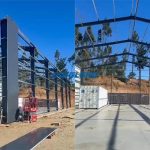
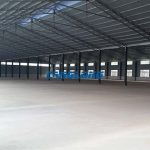
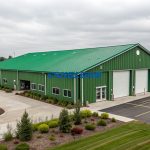
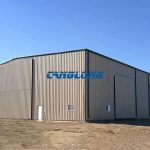
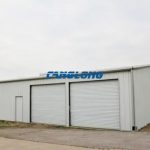
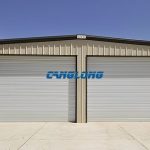
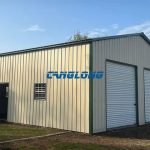
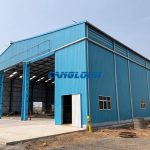
Against the backdrop of surging global industrialization and infrastructure demand, metal buildings are becoming the first choice in industrial plants, logistics warehousing, commercial complexes and other fields with their advantages of fast delivery, cost control and strong weather resistance. As a standardized and modular solution, metal building kits have reduced the time and technical threshold of traditional buildings with their ready-to-use features.
Ⅰ. The core structure of metal buildings
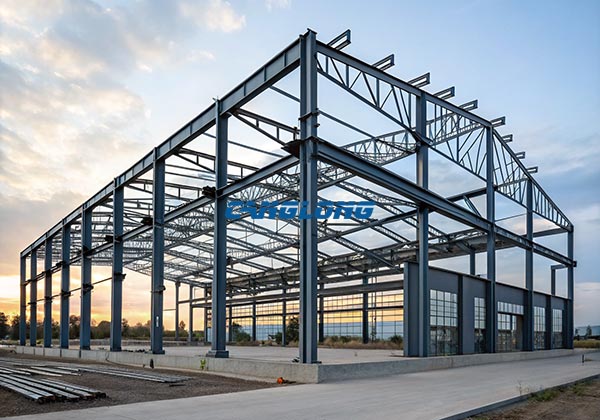
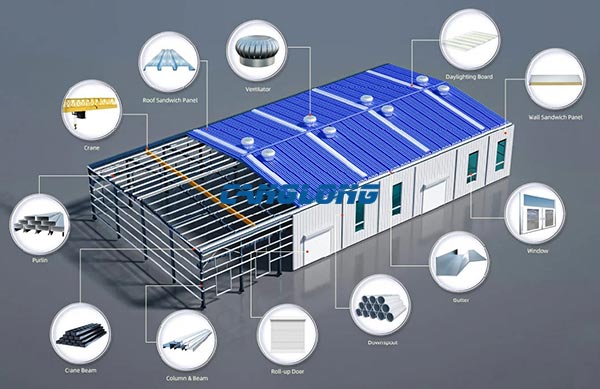
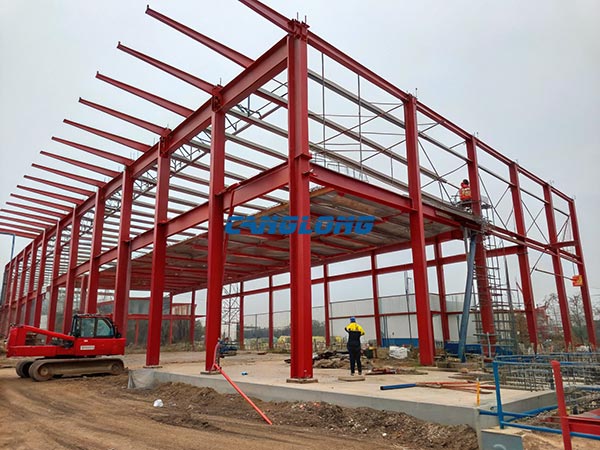
The essence of metal building is the integration of steel structure main body, external enclosure system and functional components. Its structural design directly affects the composition and price of the kit. In the industry market, mainstream metal buildings mostly use a combination of steel frames and color steel/sandwich panel enclosures, which can be specifically divided into four core structures:
1.1. Main frame system (accounting for about 40%-50%)
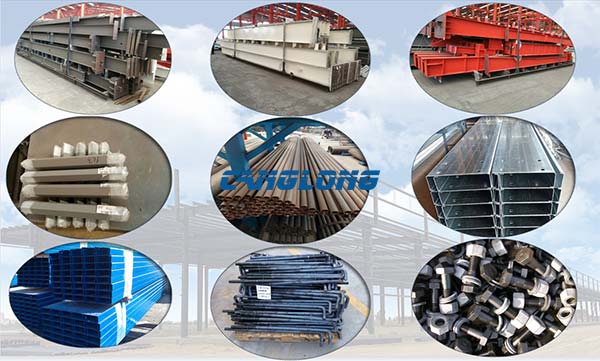
The main frame is the “skeleton” of the building, consisting of steel columns, steel beams, purlins, and support systems, and bears all loads (self-weight, snow load, wind load, etc.).
Steel columns/beams: mostly H-shaped steel or square tubes, mostly made of Q235B or Q355B, with hot-dip galvanized surface, anti-corrosion period ≥ 25 years.
Purlins: C-shaped or Z-shaped cold-bent thin-walled steel, usually with a spacing of 1.5m-2.5m, used to fix roof panels and wall panels.
Support system: including horizontal support and column support, mostly using round steel or angle steel.
1.2. Enclosure system (accounting for about 25%-35%)
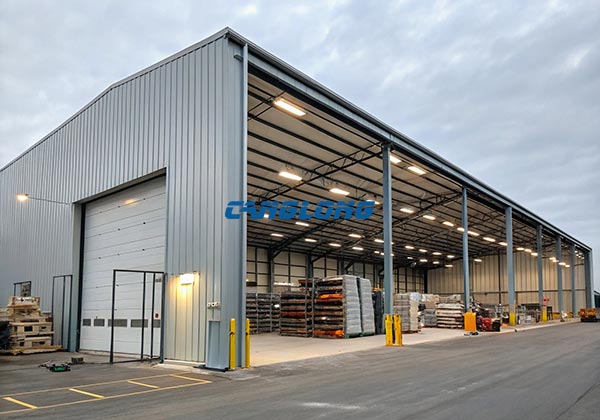
The enclosure system is the “skin” of the building, which determines the insulation, waterproof and wind resistance performance, and is mainly divided into two parts: wall and roof.
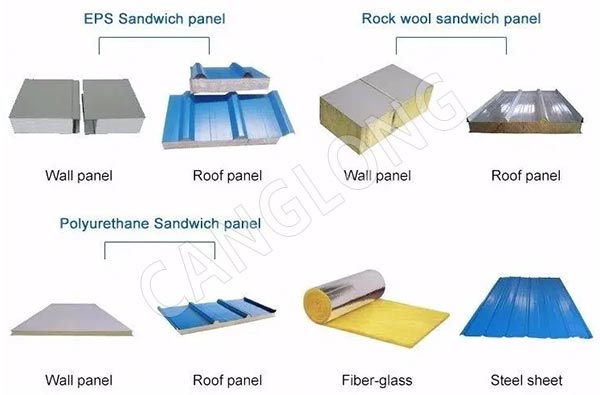
Wall system: commonly used color steel plates (thickness 0.4mm-0.8mm, coated with PE/PVDF), sandwich panels (rock wool/polyurethane core material, fire rating A1).
Roof system: In addition to the color steel plate, it is necessary to match the gutter (stainless steel/galvanized steel), downspout (PVC/galvanized steel), and flashing (waterproof edge).
Door and window system: Mostly metal frames (aluminum alloy/galvanized steel), hollow glass or color steel sandwich panel doors, suitable for industrial ventilation and lighting needs.
1.3. Functional components (accounting for about 15%-25%)
Functional components are “extension modules” that meet the needs of specific scenarios, including:
Crane system: track beam (H-shaped steel), electric hoist (suitable for 5-20 ton cranes).
Ventilation/lighting: roof fan, light strip (FRP light-transmitting plate or color steel light-transmitting plate).
Fire protection system: fire retardant paint, smoke alarm device (essential for storage buildings).
Ⅱ. Metal building kits prices
The price of metal building kits is affected by five major factors: raw materials, transportation, labor, taxes, and customization, and there are significant differences in different regions around the world. The following is a typical price range in major global markets in 2024 (taking a single-story industrial plant as an example, with an area of 1,000 square meters, a span of 24 meters, and a cornice height of 8 meters).
Area
Main Framework (USD 10000)
Enclosure Aystem (USD 10000)
Functional Components (USD 10000)
Total Price (USD 10000)
Core Cost Driven
China
11.4-14.3
5.7-7.2
2.8-4.3
20-25.7
Steel prices (accounting for 45%), large-scale production to reduce costs
Southeast Asia
12.8-15.7
6.4-7.8
3.5-5
22.8-28.5
Transportation costs (Chinese exports+local customs clearance), high temperature anti-corrosion requirements
Middle East (Saudi Arabia)
15.7-18.5
7.1-8.6
4.2-5.7
27.2-32.9
High standard anti-corrosion (salt spray environment), local labor cost
Transportation distance (from Asia to South America), anti-corrosion in tropical climate
Analysis of key price variables
Raw materials (steel): account for 40%-50% of the total cost of the kit, affected by international iron ore prices and energy costs (electric furnace steelmaking vs. blast furnace steelmaking). The global average price of steel in 2024 is about US$600-700/ton (China), and the Southeast Asian market may rise by 10%-15% due to import tariffs.
Transportation and customs clearance: The sea freight for cross-continental transportation (such as China to South America) is about US$1,500-2,500/container (20 feet), plus the destination port tariff (Brazil’s industrial product import tax is about 18%), pushing up the total price by 15%-20%.
Degree of customization: Standardized kits (universal span, conventional load) are low-priced. If you need to adjust the column distance (such as 12m→18m) and increase the fire protection level of the sandwich panel (B1→A1), the cost may increase by 10%-30%.
Ⅲ. Canglong Group’s metal building kits solution
Facing the price differences and demand fragmentation in the global market, Canglong Group (the world’s leading metal building solution provider) has achieved the competitive advantages of low cost, high adaptability and full-cycle service through the integration of standardization and customization. Its core strategies are as follows:
3.1. Modular product design
Canglong converts 90% of conventional demands (such as spans of 12m-36m and loads of 2-8 tons/㎡) into standardized kits, and dilutes costs through large-scale production. For example:
The main frame adopts universal modules of H-shaped steel columns and Z-shaped purlins to reduce cutting losses (the traditional customization loss rate is 15%, while Canglong only 5%).
The enclosure system provides two standard options: color steel plate (PE coating) and sandwich panel (rock wool), covering 90% of industrial scene requirements.
Functional components (such as ventilation and lighting) adopt plug-and-play design, and the on-site installation time is shortened by 40%.
3.2. Full-cycle cost optimization
The price of Canglong not only includes materials and installation, but also reduces users’ hidden costs through full life cycle management.
Anti-corrosion upgrade: hot-dip galvanizing (275g/㎡) and fluorocarbon coating are used for double protection, and the anti-corrosion period in tropical areas is extended from 15 years to 25 years.
Earthquake-resistant design: In projects in the Middle East and South America, a frame support system is used to reduce the cost of later reinforcement.
Operation and maintenance support: Provide free BIM models (including all component parameters), and the local cooperation team will respond to maintenance needs (such as loose bolts and damaged roof panels) within 48 hours.
Ⅳ. Conclusion
The price of metal building kits are essentially the art of balancing demand, cost, and service. Canglong Group reduces basic costs through modular design, makes transportation and customs clearance more worry-free, and optimizes hidden expenses through full-cycle management, providing global users with cost-effective and highly adaptable solutions. Whether it is a tropical factory in Southeast Asia, a high-cold warehouse in the Middle East, or an earthquake-resistant logistics center in South America, Canglong can use standardized kits as the basis and quickly customize them in combination with local needs to help users achieve the goals of low-cost construction, high-efficiency operation, and long-term reliability.
Choosing Canglong is not only choosing a set of metal buildings, but also choosing the “efficient engine” of global industrial infrastructure.