How can modular and prefab steel structures assist agricultural building?
As agriculture accelerates its transformation towards scale, intelligence, and sustainability, traditional agricultural buildings, due to lengthy construction periods, poor adaptability, and high cost fluctuations, are no longer able to meet the efficiency demands of modern agriculture. Modular and prefab steel structures, with their core advantages of industrialized production, flexible adaptability, and low carbon footprint, are becoming a key breakthrough in agricultural building upgrades. This article will analyze how they can inject new momentum into agricultural construction from four perspectives: efficiency, cost, functionality, and sustainability.
1. From On-site Construction to Smart Factory Manufacturing
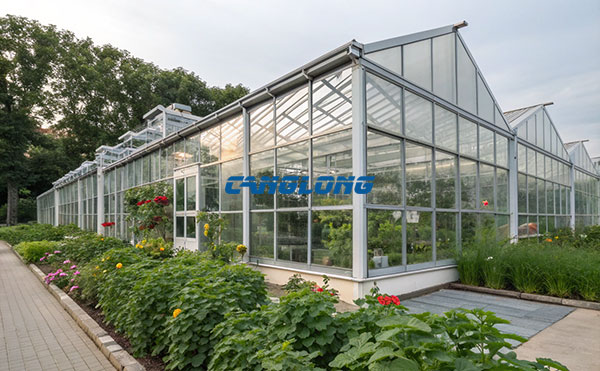
Traditional agricultural buildings (such as greenhouses, livestock sheds, and granaries) rely on on-site casting or piecemeal construction. Due to weather, labor, and material transportation constraints, construction periods often take months or even more than half a year. For example, a 1,000-square-meter traditional greenhouse requires on-site formwork and concrete curing. Rainy seasons or winter weather can extend construction times by 30%-50%.
Prefab steel structures reshape the process through factory prefabrication and on-site assembly:
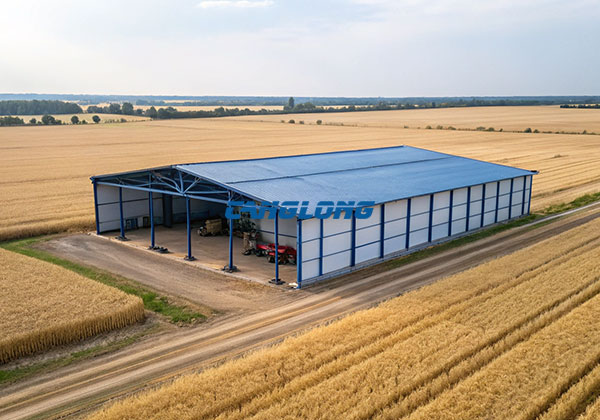
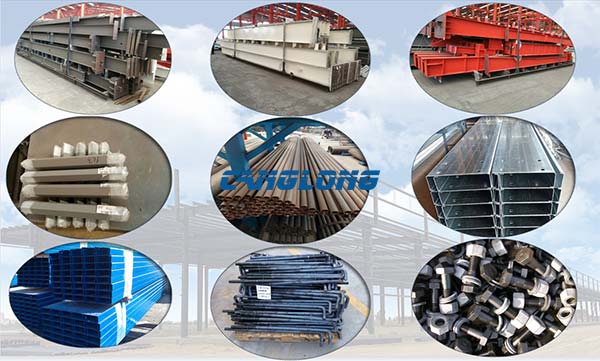
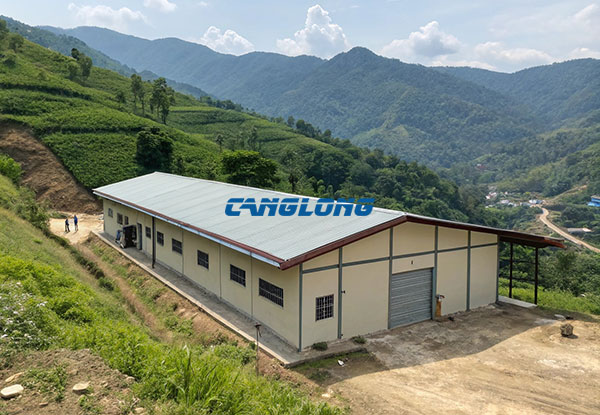
Factory-based production: All steel components (beams, columns, trusses, wall panels, and roofs) are fabricated in the factory according to standard drawings, with millimeter-level precision. Insulation, ventilation windows, plumbing, and other supporting facilities are also integrated, making the building components the finished product.
Quick assembly: Prefabricated modules are quickly assembled on-site using bolts or welding, reducing the assembly time for a single 1,000 square meter greenhouse to 7-15 days (compared to 45-60 days using traditional methods), significantly reducing the loss of crop planting/livestock breeding cycles due to construction delays.
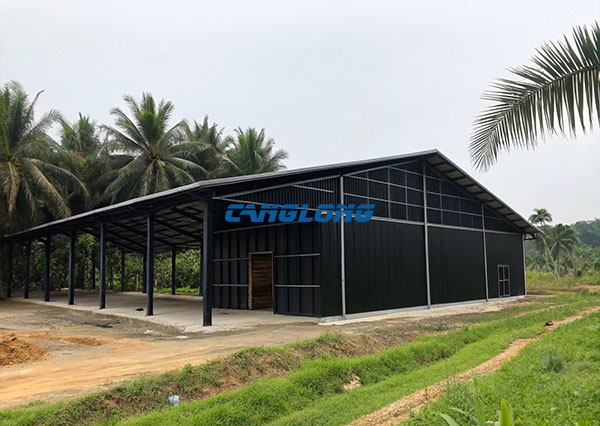
All-weather construction: Factory production is unaffected by weather, requiring only small on-site machinery. Operation is possible during both the rainy and winter seasons, making it particularly suitable for agricultural facility construction in tropical rainy regions (such as Southeast Asia) or high-latitude cold regions (such as Northern Europe).
2. From Standardization to Customization
Agricultural scenarios are complex and diverse. Greenhouses must balance lighting and temperature control, livestock sheds require ventilation and epidemic prevention, grain silos emphasize load-bearing and moisture-proofing, and processing plants require adaptable equipment layouts. Traditional buildings, due to their fixed structures, struggle to quickly respond to diverse needs.
The “Lego-like” design of modular steel structures solves this problem:
Modular Combination: Basic modules (such as a 10m x 10m standard unit) can be expanded, transformed, or stacked according to needs. For example, a greenhouse can be quickly upgraded to a smart greenhouse by adding shading modules, supplemental lighting modules, or CO₂ fertilization modules. Livestock sheds can be adapted to the breeding needs of different livestock (pigs, chickens, sheep) by adding temperature control modules and automatic feeding modules.
Parametric Customization: Using BIM (Building Information Modeling) technology, module size, ventilation rate, daylighting, and other parameters can be adjusted for different crops (such as high-value-added flowers requiring precise temperature and humidity control) or species (such as dairy cows requiring more space), achieving a customized solution for each project. Regional
Adaptability: For typhoon-prone areas (such as Southeast Asia), the wind resistance of the modular frame can be enhanced. For seismic zones (such as South America), lightweight steel structures and flexible connection designs can be adopted. For extremely cold regions (such as Canada), double-layer insulation modules and ground-source heat pump interfaces can be integrated to reduce subsequent retrofit costs.
3. From High Investment to Full-Life Cost Reduction
The profitability of agricultural buildings is highly dependent on the input-output ratio. Traditional models involve large fluctuations in labor, material, and maintenance costs, often compressing profit margins. Prefabricated steel structures reshape the economic model through industrialized cost reduction and long-term efficiency gains.
Reduced Direct Costs: Factory-based production reduces on-site labor (requiring only 30% of the traditional construction manpower), steel can be purchased in bulk, reducing costs (15%-20% lower than concrete structures), and the loss rate of prefabricated components is less than 5% (compared to 15%-20% for traditional construction). Taking a 1,000 square meter smart greenhouse as an example, prefab steel structures can save 10%-15% of initial construction costs.
Reduced Maintenance Costs: The steel surface is galvanized or spray-coated, offering a corrosion-resistant lifespan of 25-30 years (compared to only 8-10 years for traditional color-coated steel). Its modular design facilitates partial replacement, reducing lifecycle maintenance costs by over 40%.
Increased Asset Value: Prefabricated steel structures, with their clear structure and well-defined property rights, are more easily accessible to financial institutions. Furthermore, their dismantling and relocation capabilities (e.g., relocation costs are only 30% of reconstruction costs) give agricultural facilities the properties of liquid assets, making them particularly suitable for regions with frequent land transfers (such as Africa and South Asia).
4. From High-Carbon to Zero-Carbon Agriculture
Agriculture accounts for 10%-12% of global carbon emissions (IPCC data). Energy conservation and carbon reduction in agricultural buildings have become a key focus of the “dual carbon” goals. Prefab steel structures, with their material recycling and energy integration capabilities, are essential infrastructure for green agriculture.
Low-Carbon Materials: Steel is the only 100% recyclable building material, and recycling and reuse consumes only 5% of the energy used by virgin steel. Compared to concrete structures (which contribute 8% of global carbon emissions), steel-framed buildings reduce carbon emissions by 30%-40% over their entire lifecycle.
Energy Efficiency: Prefabricated steel structures can integrate photovoltaic panels (BIPV) within building gaps, and roof slopes and orientations can be optimized based on local sunlight. Furthermore, lightweight structures reduce the load-bearing requirements on the foundation, facilitating integration with systems like ground-source heat pumps and rainwater harvesting, driving the transformation of agricultural buildings toward energy-efficient structures (for example, smart greenhouses in the Netherlands achieve over 80% energy self-sufficiency through photovoltaics and waste heat recovery).
Eco-Friendliness: Steel structure modules can quickly create ecological buffer zones (such as farmland windbreaks and wetland isolation zones) or serve as support structures for vertical farming (such as multi-layer planting racks), improving land use efficiency (increasing output per unit of land by 2-3 times) and contributing to farmland conservation.
Conclusion
For customers, modularization and prefab steel structures are not only an upgrade in construction technology but also a common language for the transformation of agriculture from relying on the weather to industrial intelligent manufacturing. With its efficient, flexible, economical, and sustainable features, it adapts to the needs of all scenarios, from tropical plantations to cold-zone pastures, from small family farms to large-scale agricultural industrial parks, providing the underlying support for the scale-up, intelligentization, and greening of global agriculture.
In the future, with the deep integration of 5G, AI, and modular steel structures (for example, using sensors to monitor module stress in real time and automatically adjust ventilation and temperature control), agricultural buildings will further evolve into intelligent production units. Prefabricated steel structures are the cornerstone of this transformation.