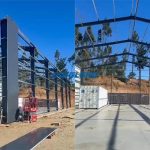
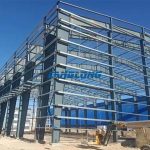
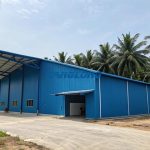
The smart and green revolution of steel modular warehouses
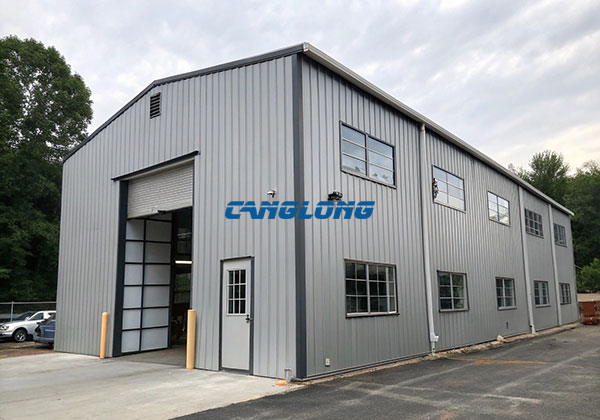
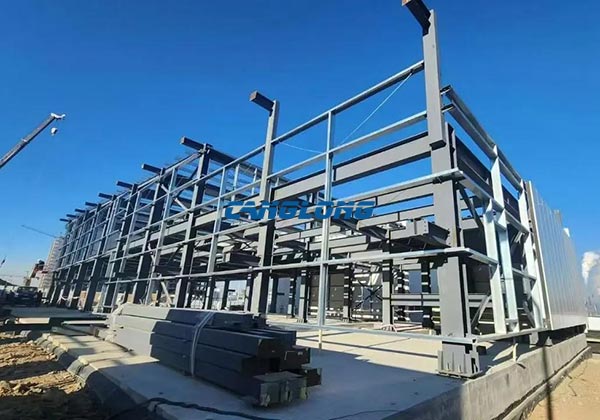
Today, as global trade accelerates and supply chain efficiency comes first, warehousing facilities are transforming from fixed assets to flexible solutions. With its core advantages of rapid construction, scalability, and high cost performance, steel modular warehouses have become a new infrastructure in the logistics and manufacturing field in the Industry 4.0 era. According to MarketsandMarkets, the global modular construction market will reach US$130 billion in 2025, of which steel structure modules account for more than 42%. It is expected to continue to expand at a compound annual growth rate of 8.2% in 2030.
Industry trends
1. Digital design + intelligent manufacturing
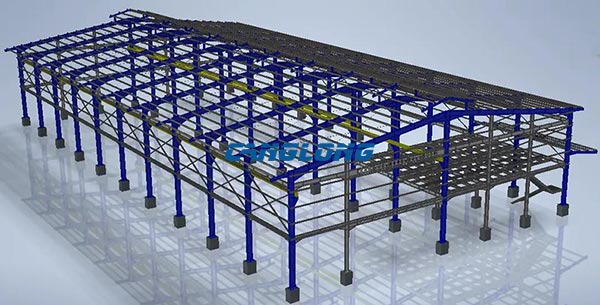
BIM (Building Information Modeling) and AI algorithms are deeply integrated into the design process to achieve full-process optimization from structural calculation to material procurement. For example, China CIMC has used digital twin technology to shorten the design cycle of a single warehouse by 30% and control the error rate to the millimeter level. At the same time, robotic welding, automated spraying and other processes improve manufacturing accuracy, making the modular units more than 95% standardized and adaptable to different climate and geological conditions around the world.
2. Green transformation becomes a necessity
The European Union’s Building Energy Efficiency Directive requires that the carbon emissions of new buildings in 2030 be reduced by 60% compared with 2015. The US LEED certification system includes the “carbon footprint” of modular buildings into the scoring criteria. The steel modular warehouse achieves low-carbonization throughout its life cycle through the use of recycled steel, photovoltaic integrated roofs, and rainwater recycling systems. For example, a logistics park project in Dubai uses steel module warehouses covered with solar panels, which can reduce carbon emissions by 1,200 tons per year.
3. The outbreak of scene-based customization
From traditional logistics centers to emergency medical shelters, data centers, and agricultural cold chains, the deformation capabilities of steel modular warehouses have been fully exploited. During the epidemic, temporary vaccine warehouses were set up within 72 hours in many European countries, as well as movable modules for pre-cooling agricultural products in Southeast Asia, both of which proved its ready-to-use flexibility.
Regional demand differentiation and opportunities
Asia-Pacific: Infrastructure investment in China and India drives demand. In 2023, China’s steel modular warehouse production will account for 55% of the world’s production, mainly used for e-commerce logistics and supporting the new energy vehicle industry chain.
Europe and the United States: Germany and the United States focus on intelligent transformation, and the penetration rate of smart warehouses integrating IoT sensors and AGV dispatching systems is increasing year by year.
Potential of emerging markets: Due to port expansion and resource development in the Middle East and Africa, demand for low-cost, fast-delivery module warehouses has surged, and Chinese companies have seized share through localized assembly models.
Challenges and Breakthroughs
Despite its promising prospects, steel modular warehouses still face problems such as high transportation costs and insufficient international mutual recognition of standardization. The industry is reducing costs through regionalized production and localized assembly models, and promoting the unification of ISO modular building standards.
Conclusion
Steel modular warehouses are not only an innovation in construction technology, but also an important support for the resilience of the global supply chain. From building houses to building blocks, this steel-based revolution is redefining the infinite possibilities of warehousing space. No matter where you are, efficient, green, and flexible storage solutions will eventually become the key node connecting production and consumption.