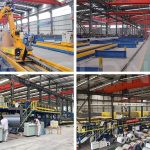
Canglong steel structure surface paint film thickness inspection
In steel structure construction, the quality of the anti-corrosion coating (paint film) directly affects the service life and safety performance of the components. Especially in coastal, high-humidity, or industrial environments, whether the paint film thickness meets standards is one of the important indicators for judging the quality of the steel structure. Canglong Group consistently adheres to a strict quality control system, conducting paint film thickness inspections and random checks on steel structure components before each shipment to ensure that products meet or exceed industry standards.
I. Basic Requirements for Paint Film Thickness
According to the prevailing standards in the steel structure industry, the required anti-corrosion paint film thickness for steel components is typically:
Standard Thickness: 120µm
Allowable Negative Deviation: -25µm
Minimum Acceptable Value: ≥95µm
👉 In other words, the paint film thickness at any inspection point must not be lower than 95µm; otherwise, it will be considered unqualified.
This standard is mainly used to ensure that the steel structure has sufficient anti-corrosion capabilities during long-term use, delaying oxidation and rust.
II. Why is paint film thickness so important?
1. Improved corrosion resistance
A more uniform and appropriately thick paint film effectively isolates the steel from air and moisture, preventing corrosion.
2. Extended service life
A qualified coating can significantly extend the service life of steel structures, reducing maintenance and renovation costs.
3. Adaptability to complex environments
In high-humidity, coastal, or industrially polluted environments, paint film thickness directly determines the durability of components.
III. Canglong Group’s Testing Process
To ensure consistent quality in every batch of steel structure products, Canglong Group implements a rigorous paint film testing process before shipment:
✔ Sampling Inspection
Random sampling inspection is conducted on different batches and components to ensure overall quality consistency.
✔ Professional Instrument Measurement
A professional coating thickness gauge is used to test multiple points on the component surface to ensure data accuracy.
✔ Multi-point Inspection
Multiple measurement points are typically selected for each component to avoid local deviations affecting the overall assessment.
IV. Quality Standards
Canglong Group not only meets industry standards but also adheres to quality control principles that exceed those standards:
All test results must exceed the minimum requirement of 95µm.
Actual control targets are typically close to or reach 120µm and above.
Substandard components are reworked or repainted.
👉 Ensuring that every product leaving the factory possesses stable and reliable anti-corrosion performance.
V. Customer Value Brought by Quality Control
Through strict control of paint film thickness, customers can obtain the following practical benefits:
Reduced later maintenance costs;
Extended building lifespan;
Improved overall project quality and reliability;
Better adaptability to complex climatic environments (such as Africa, Southeast Asia, and coastal areas).
VI. Industry Trends
Currently, the global steel structure industry is moving towards higher quality standards:
Stricter anti-corrosion requirements
More refined quality testing
Higher durability coating systems
Under this trend, companies like Canglong Group that adhere to high-standard testing will be more competitive in the market.
Conclusion
Canglong Group ensures that every batch of its steel structure products possesses excellent corrosion resistance and long-term stability through rigorous testing processes and quality control exceeding standards. For customers, this not only guarantees product quality but also reflects the long-term value of their projects.