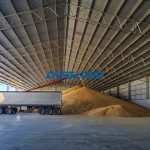
How Peruvian blueberry exporters reduce losses using metal warehouses?
According to the FAO’s 2025 Global Agricultural Supply Chain Report, post-harvest losses for fruits in South America are generally as high as 15-20%, with blueberries being particularly vulnerable due to their thin skin and perishable nature. Peru, the world’s second-largest blueberry exporter (accounting for 18% of global supply), suffers losses exceeding $230 million annually due to spoilage and dehydration caused by improper storage. This equates to 2 out of every 10 boxes of exported blueberries disappearing before reaching consumers.
“In the past, after harvesting our blueberries, we could only rely on simple bamboo sheds for temporary storage. Under high temperatures, losses reached 5% within 24 hours, and the entire batch could be ruined after a week,” admitted Carlos, head of AgroFresh, a Peruvian blueberry exporter. “These losses not only ate up profits but also eroded international buyers’ confidence in our quality control.”
How do metal warehouses reduce losses?
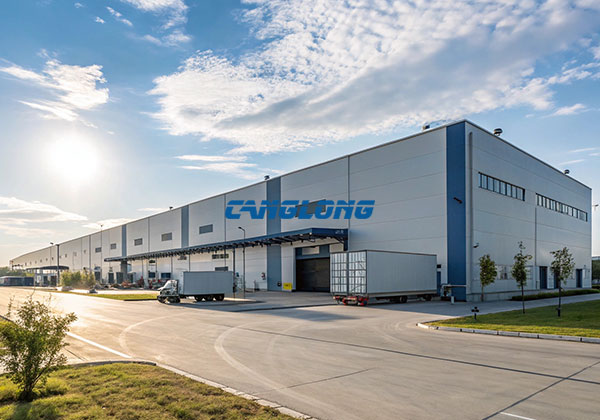
The turning point came in 2023. After introducing modular metal warehouses, AgroFresh’s post-harvest loss rate plummeted from 20% to 8%, saving over $2 million annually. Behind this success lies the precise solution of metal warehouses to the pain points of blueberry storage.
1. Structural Strength
Traditional bamboo sheds/simple steel-structured warehouses suffer from three fatal flaws: leaks and seepage, large temperature fluctuations, and difficulty in controlling pests. The new metal warehouses, using hot-dip galvanized steel frames and sandwich insulation panels, combined with airtight doors and windows, can stably control the internal temperature at 0-2℃ and maintain humidity at 90-95%. This is a constant temperature and humidity environment that bamboo sheds cannot achieve.
“The metal warehouse is like a safe for blueberries, with temperature fluctuations not exceeding ±0.5℃, completely eliminating mold growth caused by condensation,” Carlos explained. This alone reduced short-term losses from 5% to 0.5%.
2. Clever Functional Design
Peruvian blueberry exports involve multiple stages: harvesting, pre-cooling, grading, packaging, and sea freight. The metal warehouse achieves end-to-end loss control through modular zoning.
Pre-cooling Zone: Equipped with forced-ventilation pre-cooling equipment, reducing the core temperature of the fruit from 25℃ to 4℃ within 2 hours.
Grading and Packaging Zone: Independent insulated operating room to prevent personnel from bringing in heat.
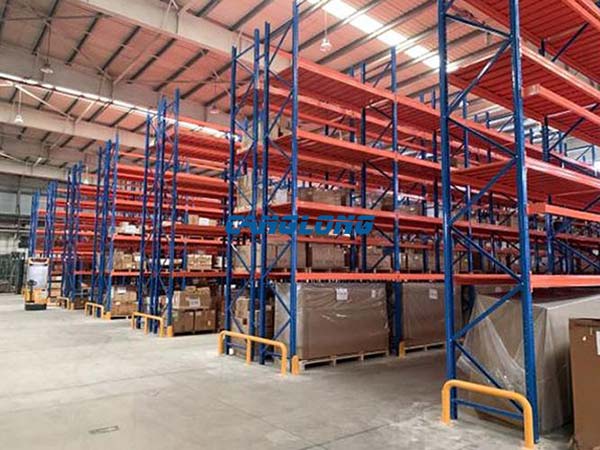
Temporary Storage Zone: Shelving-style storage replaces stacking, reducing fruit compression damage; compression losses decreased from 12% to 3%.
“In the past, to meet shipping deadlines, we often packed insufficiently pre-cooled blueberries directly into boxes, resulting in a rot rate exceeding 10% during sea transport. Now, the pre-cooling area in our metal warehouse gives us a buffer time, increasing our quality compliance rate to 98%.”
3. Cost and Efficiency
The reduced losses in metal warehouses do not come at the cost of high costs. Compared to traditional concrete warehouses, their construction cycle is shortened by 40%, maintenance costs are reduced by 30%, and they can be flexibly expanded as business grows.
“A 2000㎡ metal warehouse requires an investment of approximately $300,000, but the $2 million saved annually due to reduced losses means we can recoup our investment in just one year,” Carlos calculated. “More importantly, lower losses allow us to take on more high-priced orders, increasing our gross profit margin by 15 percentage points.”
Metal Warehouses Become Standard for South American Agricultural Products Exports
AgroFresh’s success is not an isolated case. According to data from the South American Association of Agricultural Engineering (SAEA), by 2025, the adoption rate of metal warehouses in Peru and Chile’s main blueberry producing regions will increase from 15% five years ago to 40%, driving down the region’s average post-harvest loss rate from 18% to 11%.
“Metal warehouses are not luxuries, but rather the infrastructure for agricultural exports,” points out SAEA expert Maria. “As global demands for fresh produce quality increase, metal warehouses with temperature control, moisture protection, and damage prevention capabilities are becoming a core competitive advantage for South American agricultural products in overcoming trade barriers.”
Lessons for Other Exporters
Fruit producers in other countries also face the challenge of post-harvest losses. The Peruvian case reveals that the value of metal warehouses lies not only in storage space but also in transforming the variable of loss into increased profits through technological means.
Whether it’s blueberries, cherries, or avocados, stable temperature control, efficient processes, and durable structures are the three pillars of metal warehouses in solving the problem of losses during export. As Carlos said, “Only when we no longer pay for spoilage can we truly focus on how to sell our products further and at higher prices.”