How to select insulated wall panels for industrial building projects?
Under the wave of Industry 4.0 and green manufacturing, industrial buildings are transitioning from prioritizing functionality to one that prioritizes efficiency, safety, and sustainability. As the central energy control hub for industrial building, the selection of insulated wall panels directly impacts a project’s operating costs, safety, and long-term competitiveness.
The requirements for insulation wall panels vary significantly across different industrial scenarios (such as factories, warehouses, cold storage, and energy stations). The diverse climate conditions, building codes, and industry standards further complicate the selection process. This article will begin with the core requirements of industrial building, combine material performance comparisons with regional code compliance, and provide users with a scientific selection framework.
I. Core Requirements for Insulated Wall Panels in Industrial Building
Insulation wall panels for industrial buildings differ from those used in residential buildings. Their use often involves special conditions such as the operation of high-energy-consuming equipment, exposure to extreme environments, and the risk of chemical corrosion, placing even stricter demands on materials. Core requirements can be summarized into five dimensions:
1. Thermal Insulation
In industrial buildings, heat conduction through walls can account for up to 20%-30% of energy consumption (e.g., cold chain warehouses and temperature-controlled workshops). The thermal conductivity (λ) of insulated wall panels directly determines insulation efficiency: the lower the λ, the better the insulation performance. For example:
Factories in cold regions (e.g., Northern Europe and Canada) require a λ ≤ 0.035 W/(m·K) to minimize winter heat loss.
Warehouses in hot regions (e.g., the Middle East and Southeast Asia) require a λ ≤ 0.040 W/(m·K) to reduce summer cooling loads.
Energy-intensive industries (e.g., metallurgy and chemical industries) require a λ ≤ 0.030 W/(m·K) for energy-efficient plants to meet process temperature control requirements.
2. Fire Safety
Industrial buildings often store flammable raw materials (e.g., wood and chemical raw materials) or high-value equipment. In the event of a fire, the speed of fire spread and the amount of toxic smoke released directly determine rescue time. Most countries around the world (such as China’s GB 50016, the EU’s EN 13501, and the US’s NFPA) have mandatory requirements for the flammability of industrial building exterior walls and roofs.
Class A and B buildings (such as chemical plants and oil depots) must use Class A non-combustible materials (λ ≤ 0.040 W/(m·K) and no burning dripping).
Class C and D buildings (such as machining plants and warehouses and logistics) may use Class B1/B2 flame-retardant/combustible materials, but must pass system-level fire protection tests (such as NFPA 285 flame spread limits).
3. Environmental Adaptability
Industrial building is located in polar regions, deserts, coastal areas, and chemical industrial parks. Therefore, insulated wall panels must be resistant to aging, moisture, and corrosion.
In high-humidity areas (such as tropical rainforests and coastal industrial zones): Materials with a water absorption rate of ≤1% (such as rock wool and glass wool) are required to avoid a surge in thermal conductivity after water absorption (XPS λ can increase 2-3 times after water absorption).
In chemically corrosive environments (such as chemical parks and electroplating plants): Materials with acid and alkali resistance (such as PVC-coated steel plates and fluorocarbon resin-treated aluminum-magnesium-manganese plates) are required to avoid degradation due to acid mist and salt spray.
In areas with strong UV rays (such as the Middle East and Africa): Materials with UV resistance are required to prevent surface powdering and cracking. Examples include polyurethane with added antioxidants and modified silicone coatings.
4. Installation and Maintenance
Industrial buildings are typically large (a single building can reach up to 100,000 square meters), with tight construction deadlines, and require efficient and low-cost maintenance.
Ease of installation: Dry construction materials (such as rock wool sandwich panels and prefabricated metal sandwich panels) are preferred to avoid wet work and shorten construction time by 30%-50%.
Modular Design: Standardized panels support plug-and-play integration, reducing on-site cutting losses. Traditional on-site cutting losses are approximately 5%-8%, while standardized panels can be reduced to 2%.
Maintenance Costs: Choose weather-resistant materials (such as aluminum-magnesium-manganese alloy panels with rock wool core) to avoid frequent renovations. While ordinary color-coated steel panels require panel replacement every 10-15 years, aluminum-magnesium-manganese panels have a lifespan of up to 50 years.
5. Sustainability
Over 60 countries worldwide (such as the EU, China, and the US) have enacted legislation requiring industrial building to meet “zero carbon” or “near-zero carbon” standards. The low carbon properties and recyclability of insulated wall panels are crucial.
Production Energy Consumption: Rock wool (approximately 150 kg standard coal per ton) < polyurethane (approximately 200 kg standard coal per ton) < EPS (approximately 250 kg standard coal per ton).
Recyclability: Rock wool (recycling rate > 90%), aluminum-magnesium-manganese panels (recycling rate 100%) > XPS (difficult to recycle, only 30%).
Carbon Footprint: Using recycled materials (such as recycled rock wool and recycled plastic cores) can reduce lifecycle carbon emissions by 30%-50%.
II. Comparison of Mainstream Insulation Wall Panel Types
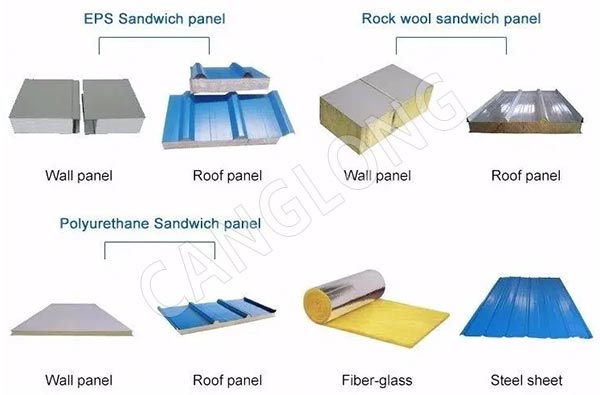
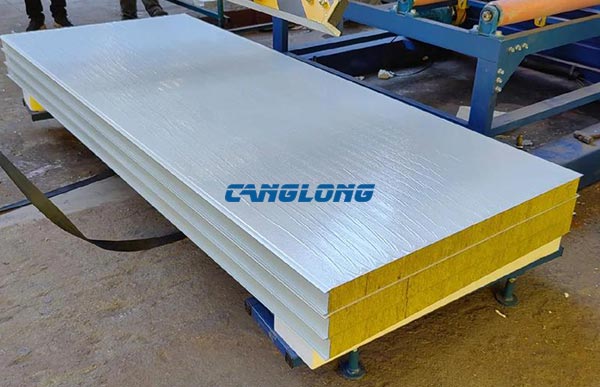
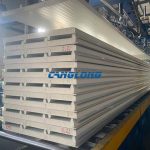
Common insulated wall panels used in industrial buildings can be divided into three categories: metal sandwich panels, inorganic fiberboard, and organic foam panels. Their performance and application scenarios vary significantly (see Table 1).
Temporary warehouse, low fire risk workshop, cold storage (moisture-proof required)
Key Comparison Conclusions:
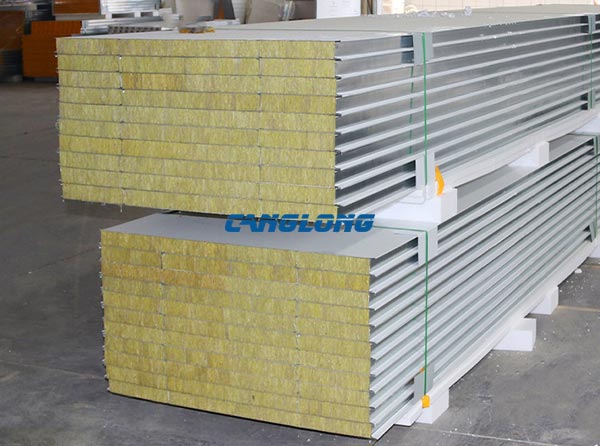
For high fire protection requirements (Class A/B factories): rock wool sandwich panels or inorganic fiberboard (Class A non-combustible) are preferred.
For high humidity/high corrosion requirements (coastal/chemical zones): aluminum-magnesium-manganese panels with rock wool core (high weather resistance) or glass wool sandwich panels (low water absorption).
For large spans/lightweight requirements (logistics centers, high-altitude factories): polyurethane sandwich panels (low density, high strength) or aerogel panels (ultra-lightweight, high thermal insulation).
Low-carbon/sustainability requirements: Choose recycled rock wool sandwich panels (recycling rate > 90%) or aerogel panels (low energy consumption for production).
III. Regional Selection Key Points
Climatic conditions, building codes, and supporting industries vary significantly across countries/regions, requiring targeted adjustments to selection strategies.
1. Europe: Focus on fire protection and low carbon emissions
Climate: Western Europe is mild and humid (e.g., Germany), Northern Europe is cold (e.g., Sweden), and Southern Europe is hot (e.g., Spain).
Regulations: The EU CPR mandates a fire resistance rating of ≥ B-s1,d0 for exterior walls of industrial building, with Class A factories requiring Class A1.
Industrial Support: The supply chains for rock wool (e.g., Saint-Gobain, Roko) and polyurethane (e.g., BASF) are mature, while metal sandwich panels (e.g., AkzoNobel) are highly standardized.
Selection Recommendations:
Northern Europe: Prioritize high-density rock wool sandwich panels (λ ≤ 0.038 W/(m·K)) with double-layer insulating glass for enhanced insulation. Southern Europe: Choose UV-resistant rock wool sandwich panels (with carbon black coating) or polyurethane sandwich panels (flame retardant treatment to B1).
All Europe: Prioritize aluminum-magnesium-manganese panels and rock wool cores (weather resistance > 25 years) that meet LEED/BREEAM certification requirements.
2. North America: Focused on efficiency and convenience
Climate: Canada experiences extreme cold (below -40°C), the central United States experiences heat (summers > 40°C), and the South experiences humidity (e.g., Florida).
Regulations: The US IBC Code stipulates that industrial building exterior walls must pass the NFPA 285 flame spread test, and Class A for Class A plants.
Industrial Support: XPS (e.g., Owens Corning) and polyurethane (e.g., Huntsman) offer leading production technologies, while prefabricated metal sandwich panels (e.g., Metl-Span) offer efficient installation.
Central United States: Choose polyurethane sandwich panels (λ ≤ 0.028 W/(m·K)), balancing lightweight design with efficient installation.
Southern United States: Choose moisture-resistant rock wool sandwich panels (covered with PE film), or aluminum-magnesium-manganese panels with a glass wool core (for moisture and corrosion resistance).
3. Asia Pacific: Focus on cost and adaptability
Climate Characteristics: North China experiences cold weather, East China experiences hot and humid weather, South China experiences high temperatures and humidity, and Southeast Asia experiences a tropical monsoon climate.
Regulatory Requirements: China’s GB 50016 stipulates that Class A factory buildings require Class A fire protection, while Class B factory buildings require Class B1. India’s IS 15894 requires a heat transfer coefficient of ≤ 0.8 W/(m²·K) for exterior walls of industrial buildings.
Industrial Support: China leads the world in rock wool (such as Beijing New Building Materials) and polyurethane (such as Wanhua Chemical) production capacity. Southeast Asia primarily relies on low-cost EPS/XPS.
Selection Recommendations:
China: For Class A factories, choose rock wool sandwich panels (compliant with GB 8624 Grade A1); for Class B factories, choose flame-retardant polyurethane sandwich panels (Grade B1).
Southeast Asia: Choose low-cost EPS sandwich panels (λ = 0.038-0.042 W/(m·K)), or aluminum-zinc steel sheets with rock wool cores, balancing cost and fire protection.
Japan and South Korea: Prioritize aerogel panels (ultra-lightweight, highly insulating), which meet stringent tsunami/earthquake resistance requirements.
IV. Practical Selection Process
To avoid selection for the sake of selection, it is recommended that industrial building projects follow the following five-step selection method.
1. Identify basic project parameters
Climate data: annual average temperature, extreme temperatures (minimum/maximum), humidity (relative humidity > 80%), wind load (e.g., coastal typhoons of force 10 or above).
Building function: factory (production type, is there high-temperature equipment?), warehouse (are stored items flammable?), cold storage (temperature < -18°C?).
Regulatory requirements: fire rating of the country/region (A1/B1/B2?), energy-saving standards (heat transfer coefficient K value ≤?), environmental requirements (recyclable content percentage?).
2. Prioritize core performance
Sort by project requirements. For example:
Chemical park factory: fire protection (A1 rating) > chemical corrosion resistance > thermal insulation.
Arctic Circle warehouse: thermal insulation (λ ≤ 0.030) > wind load resistance > low-temperature resistance (no cracking at -50°C).
Based on priority, select 2-3 candidate materials from Table 1. These may include rock wool sandwich panels, polyurethane sandwich panels, and aluminum-magnesium-manganese + rock wool panels.
4. Comparing Lifecycle Costs
Calculate initial investment and operating costs (energy consumption + maintenance):
Operating Costs: EPS sandwich panels (15%-20% higher annual energy consumption) > Polyurethane sandwich panels (5%-10% higher annual energy consumption) > Rock wool sandwich panels (long-term energy savings).
Maintenance Costs: Rock wool sandwich panels (needs local repairs every 10 years) > Aluminum-magnesium-manganese panels (50 years without major repairs) > EPS sandwich panels (panel replacement every 5-8 years).
5. Verify System Compatibility
Finally, the compatibility of the insulation wall panels with other building systems must be verified:
Connection to the main structure: Metal sandwich panels must match the purlin spacing (typically ≤ 1.2m).
Connection to doors and windows: Expansion joints (width ≥ 10mm) must be provided to prevent deformation due to thermal expansion and contraction.
Interaction with the fire protection system: Grade A materials do not require additional fire barriers, while Grade B1 materials require fire barriers (width ≥ 500mm).
V. Future Trends
Insulated wall panels in industrial buildings worldwide are evolving from single-material-based systems to multifunctional composite systems. Three future trends warrant attention.
1. Intelligent Temperature Control Integration
By embedding phase change materials (PCM) or integrated insulation photovoltaic panels (BIPV), these panels can achieve multifunctional functions: insulation, power generation, and temperature control. For example, a German automobile factory uses aerogel and photovoltaic glass composite panels to reflect solar radiation in the summer, reducing air conditioning load by 20%, and store daytime heat in the winter, reducing heating energy consumption by 15%.
2. Circular Economy Orientation
Accelerating the use of recycled materials: For example, a UK logistics center uses 100% recycled rock wool sandwich panels (recycled from old rock wool products), reducing carbon emissions by 40% compared to traditional materials. A US chemical park is promoting a trade-in policy, where recycled aluminum-magnesium-manganese panels are cleaned, refurbished, and reused.
3. Adaptability to Extreme Environments
Ultra-lightweight, high-strength, and self-healing materials are being developed for specialized environments such as polar regions and deserts. For example, a Norwegian Arctic warehouse utilizes nano-aerogel sandwich panels (with a density of only 0.02 g/cm³ and a thermal conductivity of 0.018 W/(m·K)), coated with a self-healing coating that allows even small cracks to heal automatically.
Conclusion
The selection of thermal insulated wall panels for industrial building is essentially a dynamic balance between demand, performance, and cost. Users should prioritize core needs based on the project’s climate, regulations, and supporting industrial infrastructure. They should then select the most appropriate material system through scientific comparative analysis and full lifecycle cost calculations.
In the future, with the penetration of intelligent technology and circular economy, thermal insulation wall panels will be upgraded from passive protection to active empowerment, becoming a key support for the green transformation of industrial buildings.