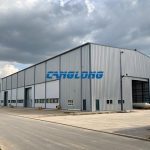
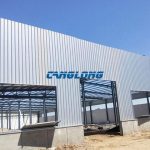
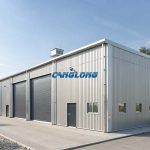
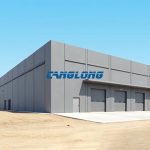
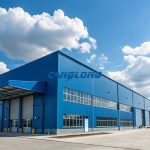
Is investing in steel warehouses feasible in 2026?
2026 is a year of comprehensive transformation for industrial warehousing towards green, low-carbon, highly prefabricated, and cross-border integrated delivery. Against the backdrop of supply chain restructuring, the continued explosion of cross-border e-commerce, and soaring labor costs, investing in steel warehouses have become a golden asset for hedging against inflation.
Buyers should decisively abandon the traditional model of on-site welding and single-material procurement, and instead choose one-stop steel structure building packages with 100% factory prefabrication, all-bolted connections, and high-efficiency polyurethane (PU) cladding systems. This is the inevitable choice to lock in high occupancy rates and maximize return on investment (ROI).
Below is a step-by-step in-depth analysis and a must-read guide before purchasing, based on 2026 building materials supply chain data, multinational building codes, and macroeconomic market data.
Why Invest in Steel Warehouses?
1. The Rigid Demand for Cross-Border Logistics and the Recovery of Domestic Manufacturing
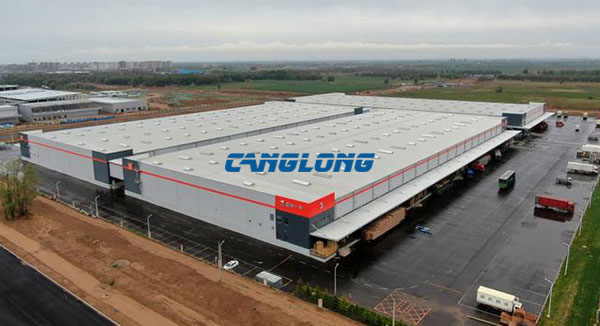
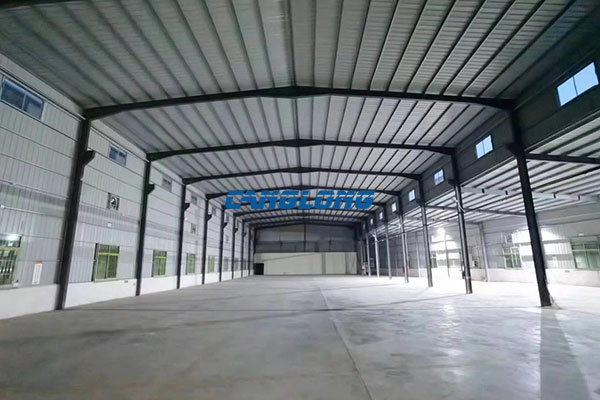
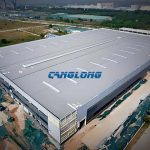
In 2026, the demand for overseas warehouses by global cross-border e-commerce companies (such as Temu, Shein, and Amazon) continued to surge at a double-digit rate. Simultaneously, the recovery of domestic manufacturing in Southeast Asia, Latin America, and North America directly spurred a large-scale demand for modern industrial workshops and distribution centers. Steel structure warehouses, with their inherent advantage of ultra-large spans, have become the preferred property type for these companies, commanding high market rental premiums.
2. High Capital Turnover
In the current macroeconomic environment, long-term capital tied up in projects signifies significant risk.
Traditional concrete construction: Slow approval processes, construction periods exceeding one year, and extreme susceptibility to weather and labor shortages.
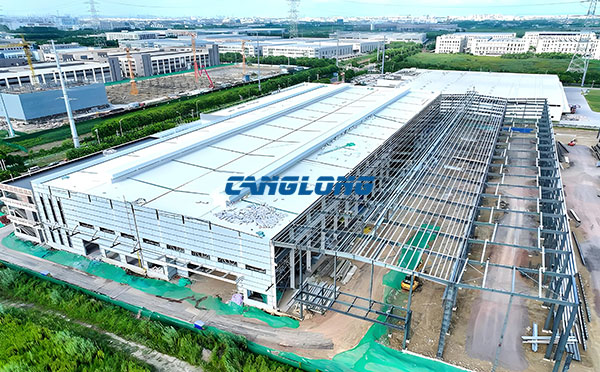
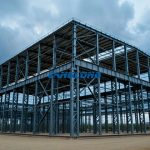
Fully prefabricated steel structure modules: From design refinement and digital factory processing to transoceanic transportation, the entire process typically takes only 2-3 months. Once delivered to the site in Azerbaijan, Costa Rica, or Canada, it functions like assembling industrial building blocks, warehouses of several thousand square meters can be completed within 4-6 weeks. Starting operations or leasing a project six months earlier means a faster return of tens or even hundreds of thousands of dollars in cash flow.
2026 Building Materials Market and Price Trends Analysis
1. Steel Prices
After several years of significant volatility, global crude steel and H-beam prices are expected to stabilize in 2026. However, it’s worth noting that building codes worldwide (especially earthquake and hurricane resistance standards) are becoming increasingly stringent.
Material Selection Strategy: The main structure (beams and columns) must be constructed using Q355B (or the international equivalent S355) high-strength low-alloy steel as standard. Although the price per ton is slightly higher than ordinary Q235 steel, its superior mechanical properties reduce overall steel consumption by 10%-15% under the same design load, lowering foundation load costs and saving on ocean freight.
2. Enclosure Systems
Traditional single-layer steel plates are being abandoned by the global mainstream rental market due to poor insulation and susceptibility to condensation.
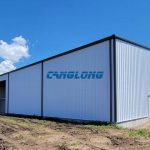
Material Selection Strategy: In 2026, the preferred choice for buyers is polyurethane (PU/PIR) sandwich panels, or polyurethane-sealed rock wool panels designed for stringent fire safety regulations. Polyurethane boasts extremely low thermal conductivity (≈0.022 W/(m·K)), and its excellent temperature-regulating outer layer effect can reduce warehouse operating electricity costs by more than 35%. It provides frost protection in cold regions (such as Canada and Northern Europe) and heat protection in tropical regions (such as Southeast Asia and Central America), making it a core component for preserving and increasing the value of fixed assets.
Steel Warehouse Kits
Three Cost-Saving Strategies for Buyers
If you decide to purchase and build a steel warehouse in 2026, to avoid construction mishaps, material shortages, and high labor costs in different locations, please implement the following strategies:
Never separately supply the main steel frame, external cladding panels, doors, windows, and drainage pipes to different suppliers.
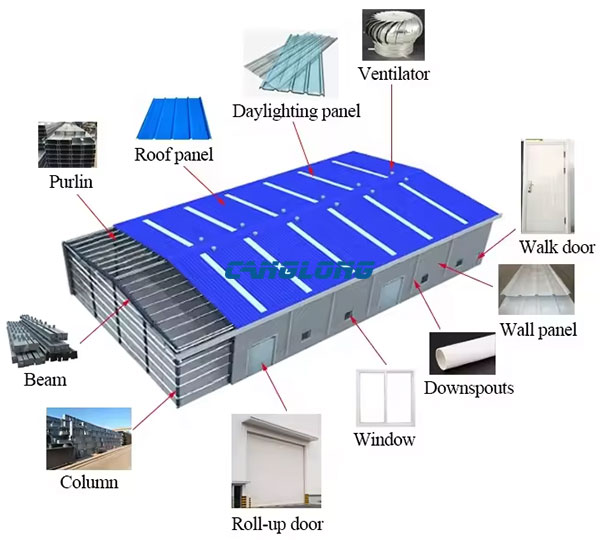
Reason: The biggest fear in multinational construction is discovering on-site that two boxes of high-strength bolts are missing or the dimensions of the corner flashing do not match. Target suppliers capable of supplying full-supply components.
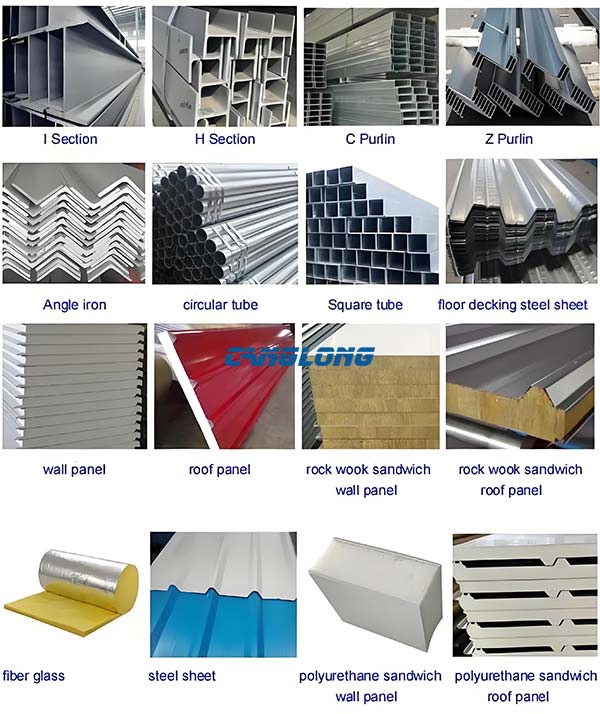
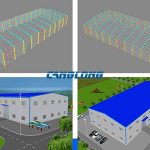
Results: All H-beams, C/Z-beam purlins, tie rods, floor decking, industrial roller shutters, aluminum alloy windows, and even large items like gutters and drainage pipes, down to small items like butyl waterproof tape, are all manufactured in a single factory using a BIM system, packaged, and shipped uniformly. This ensures 100% on-site matching, zero material waste, and zero on-site secondary processing.
Strategy 2: 100% Bolted, Weld-Free Design
In developed countries like North America, Western Europe, and Australia, the hourly wage for certified welders on-site is extremely high, and there is a severe labor shortage.
Reason: All node plate welding is completed in-house by automated welding robots, and the finished product comes standard with prefabricated punched kits.
Results: On-site construction relies entirely on high-strength bolt assembly. This can help you reduce on-site installation labor costs by 30% – 50%, and the building quality is more controllable.
Strategy 3: Specialized Upgrades for Corrosion and Wind Resistance in Extreme Climates
Anomalous climates have become the norm in 2026, with salt spray storms frequently occurring in islands and coastal areas, and blizzards in high-latitude regions.
Islands/Rainy Areas (e.g., the Caribbean, Southeast Asia): Hot-dip galvanizing should be firmly chosen for primary and secondary structures. A robust zinc layer provides over 30 years of maintenance-free life, eliminating the high costs of later rust removal and painting.
Snowy Areas (e.g., Canada): Suppliers must be clearly informed of local snow load data, and the risk of heavy loads can be mitigated by increasing purlin density or optimizing roof slope (e.g., specialized single-slope or double-slope designs).
How does Canglong Group safeguard investors?
As a leading company in integrated steel structure delivery, Canglong Group has long transcended simple building material sales, dedicating itself to creating industrial spaces with higher returns on investment for global clients.
A wealth of global climate delivery templates:
In Zambia, we delivered a 1200㎡ composite workshop with brick walls at the bottom and metal panels at the top.
In Guadeloupe, French territory, we customized a fully hot-dip galvanized mezzanine warehouse specifically for the high salt spray environment.
In Canada and Venezuela, we used polyurethane (PU) cladding systems to solve the pain points of extreme cold insulation and temperature and moisture control in coffee factories.
In Azerbaijan, we successfully shipped and installed over 10,000 square meters of Q355B high-strength steel and more than 30 40-foot high cube containers for a multi-span brewery across borders.
Full-chain cross-border support: Canglong Group not only provides customized detailed designs by its BIM engineering team, but also handles international booking and transportation, and complete customs clearance documentation—a one-stop service. All steel components, sandwich panels, and accessories are sealed with thickened protective film specifically for ocean shipping and rigid corner protectors, ensuring they arrive at your site in perfect condition, just as they left the factory.
Conclusion
Investing in steel warehouses in 2026, the most expensive aspect is never the steel itself, but rather the construction delays, on-site secondary processing, and high energy consumption during operation. Choosing Canglong Group’s one-stop prefabricated module solution makes your cross-border infrastructure investment more transparent, safer, and with a higher return on investment.