Five common problems and solutions in the design and construction of steel structure buildings
Steel structures have become the mainstream choice in the global construction industry due to their high strength, fast construction, and recyclability. However, due to factors such as design logic, material characteristics, and differences in construction environment, there are still some common problems in the industry. This article combines international standards such as AISC and Eurocode with engineering practice to summarize five core issues and universal solutions, helping users improve the quality and efficiency of their projects.
Problem 1: Node design defects
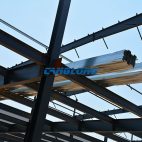
Nodes are key hubs for force transmission in steel structures, but their complex stress states are often overlooked. Common problems include: inconsistent node construction and calculation model (such as beam column nodes not considering rotational constraints), insufficient thickness of connecting plates leading to local instability, and unreasonable arrangement of bolts or welds causing stress concentration.
Solution:
Following the principle of strong nodes and weak components, the stress distribution of nodes under actual loads is verified through finite element analysis (FEA), referring to the requirements of AISC 360-16 for node ductility.
Adopting standardized node modules, such as the classic form of welding H-beams to end plates, reduces on-site cutting and adjustment.
Key nodes need to reserve deformation coordination space, such as setting sliding supports for long-span structures to avoid brittle failure under temperature stress or earthquake action.
Problem 2: Mismatch between material properties and project requirements
There are diverse global steel standards (such as Q355 in China, A572 in the United States, and S355 in Europe), and some projects have insufficient or excessive material properties due to insufficient consideration of environmental factors (such as weather resistance in maritime climates), loads (such as wind-induced vibration effects in super high-rise buildings), or costs when selecting materials. For example, ordinary carbon steel is prone to premature failure due to electrochemical corrosion when used in high salt spray environments along the coast.
Solution:
Establish a three-dimensional material selection model for environment, load, and lifespan, prioritizing the use of weathering steel or hot-dip galvanized steel to cope with corrosive environments.
Q420 or higher strength steel is selected for large-span structures to reduce cross-section.
Strictly verify material certification (such as CE mark, ASTM certification) to avoid differences in welding performance caused by mixing different standard steels.
Problem 3: Unstable welding quality
Welding is the core process of steel structure connection, but about 30% of quality accidents in global projects are related to welding. Common issues include: weld porosity, hot cracking, and lack of fusion.
Solution:
Implement dual control of welding process qualification (PQR) and welder qualification, complete process qualification according to ISO 15614 before construction, and welders must hold internationally recognized qualifications (such as AWS D1.1 certification).
Using automated welding equipment (such as robot welding machines) to reduce human error, combined with non-destructive testing (UT/MT) to randomly inspect key welds (sampling ratio ≥ 10%).
Control environmental conditions: When the wind speed is greater than 2m/s, set up a windbreak, pause welding when the relative humidity is greater than 90%, and preheat to 100-150 ℃ in low-temperature environments (<5 ℃).
Problem 4: Installation accuracy out of control
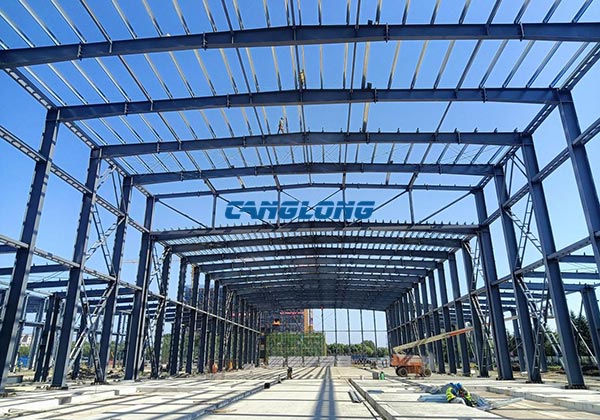
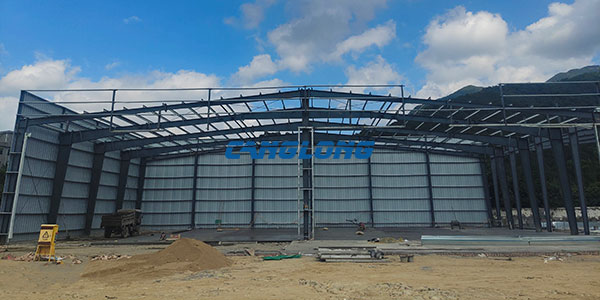
The installation accuracy of steel structures directly affects overall stability, with over 30% of projects worldwide experiencing misalignment of components due to measurement errors (such as column verticality deviation>H/1000), and even requiring cutting and rework. Typical case: A sports arena project incurred an additional $2 million adjustment due to a steel column positioning deviation of 50mm.
Solution:
Full cycle application of BIM+GNSS positioning technology: During the design phase, the installation sequence is simulated through BIM models, and during construction, RTK-GNSS (accuracy ± 2mm) is used to monitor the position of components in real time.
The temporary support and dynamic adjustment system is adopted: after the installation of the steel column, an adjustable slant support (with an adjustment range of ± 15mm) is set immediately, and the support can be removed after the overall stable frame is formed.
Problem 5: Failure of anti-corrosion system
There are significant differences in anti-corrosion requirements among different climate zones around the world, such as tropical high humidity, cold regions freezing and thawing, and industrial acid rain. However, some projects only rely on a single coating (such as epoxy zinc rich primer), without considering maintenance after coating aging and wear, resulting in corrosion and perforation within 10 years.
Solution:
According to ISO 12944, the corrosion level is classified as C1 to C5, and the matching protection system is C3 (industrial atmosphere) environment. Hot dip galvanizing (zinc layer 120 μ m) and polyurethane topcoat (thickness 120 μ m) are used. C5 (marine environment) recommends zinc aluminum magnesium alloy coating (zinc layer 200 μ m)+epoxy sealing paint+fluorocarbon topcoat.
Establish and maintain a ledger: check the collaborative optimization of the entire chain of coating completion, materials, construction, and maintenance every 2 years. Global projects need to break away from empiricism and rely on standardized design tools (such as BIM), international certification systems (such as AWS, CE), and data-driven operation and maintenance methods to solve problems in the design front-end and construction process, ultimately achieving a safe, economical, and sustainable building lifecycle.
Summary
The reliability of steel structure buildings are essentially the collaborative optimization of the entire chain of design, materials construction, and maintenance. Global projects need to break away from empiricism and rely on standardized design tools (such as BIM), international certification systems (such as AWS, CE), and data-driven operation and maintenance methods to solve problems in the design front-end and construction process, ultimately achieving a safe, economical, and sustainable building lifecycle.