Galvanized steel structure vs ordinary steel structure
In infrastructure and industrial sectors, steel structures are widely used due to their high strength and ease of processing. However, users often find themselves confused when faced with the choice between galvanized and ordinary steel structures. Is the extra cost worthwhile? Which is more suitable for their specific needs?
Differences Between the Two Types of Steel Structures
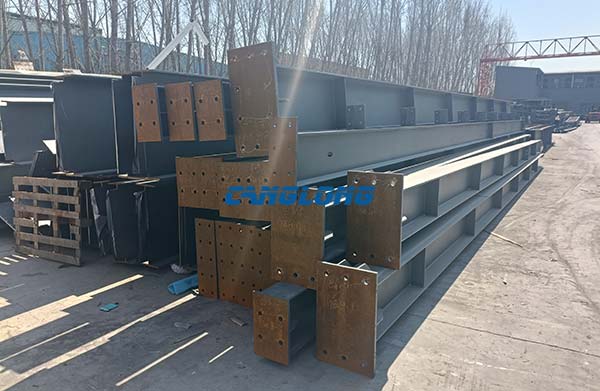
Ordinary steel plates are oxidized and rusted. When the iron element in the steel comes into contact with air and water, an electrochemical reaction occurs, gradually generating iron oxide (rust). Loose and porous rust can accelerate the corrosion of internal steel, ultimately leading to structural failure.
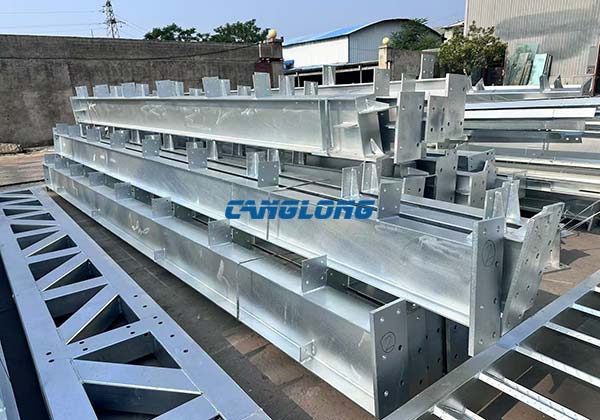
Galvanized steel plates are protected by a zinc layer, which utilizes the sacrificial anode properties of zinc by hot-dip or electroplating a layer of zinc (usually 8-275 microns thick) on the surface of the steel plate. Even if the zinc layer is partially damaged, zinc will preferentially react with oxygen and water (producing zinc oxide), delaying the corrosion of steel. This is equivalent to putting a corrosion-resistant armor on the steel.
Comparison of Structural Characteristics
Comparison Dimension
Ordinary Steel Structure
Galvanized Steel Structure
Initial State
No surface protection, prone to oxidation (white rust starts appearing in 3-6 months).
Dense zinc coating on the surface (hot-dip galvanizing has thicker and more uniform coating), corrosion-resistant right out of the factory.
Corrosion Resistance
Relies on post-construction coating (e.g., anti-rust paint), but coatings are prone to peeling.
Zinc layer provides active corrosion protection, no reliance on coatings (unless additional protection is needed in extreme environments).
Processing Adaptability
Requires re-coating for corrosion protection after welding or cutting; otherwise, cut edges are prone to rusting.
Zinc layer partially melts during welding, but remaining zinc still provides protection; cut surfaces require simple grinding or zinc replenishment.
Weight & Strength
High steel purity, slightly lighter weight for the same volume.
Zinc coating adds only ~3-5% weight; strength is consistent with ordinary steel (zinc layer does not affect the mechanical properties of the base material).
Differentiation in Applications
The core differences between the two directly determine their applicable scenarios. Ordinary steel is suitable for short-term, dry, and low-corrosion environments. Galvanized steel, on the other hand, is essential for long-term, humid, and highly corrosive environments.
Typical applications of ordinary steel structures:
Short-term temporary buildings: Construction site sheds, prefabricated houses, with a service life of 1-3 years and no long-term maintenance required.
Dry indoor environments: Warehouse shelving, non-load-bearing partitions in factories, free from rain/high humidity corrosion.
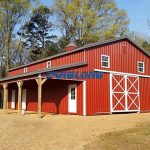
Low-cost temporary needs: Steel frames for self-built houses, small farm implement sheds, with limited budgets, and the option to renovate after 5-10 years.
Applications of galvanized steel structures:
High humidity/high salinity environments: Coastal warehouses, port crane supports, offshore wind turbine foundations, resisting salt spray corrosion.
Agriculture and infrastructure: Greenhouse frames, irrigation pipe supports, livestock and poultry sheds.
Industry and public facilities: Chemical plant equipment platforms, sewage treatment plant steel structures, highway noise barriers.
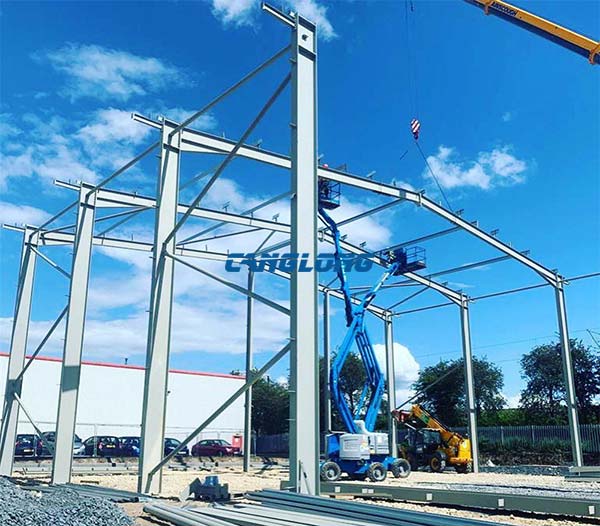
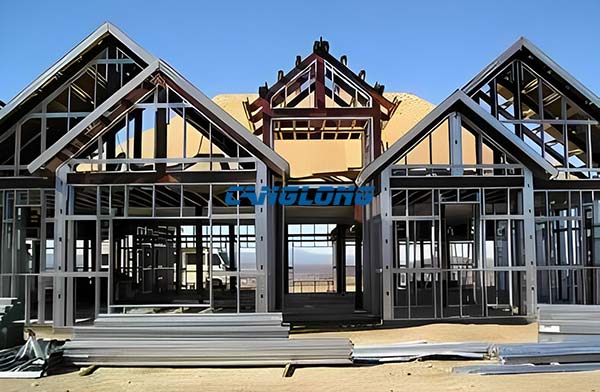
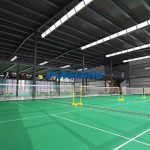
Permanent buildings: Stadium roof trusses, commercial complex steel structure frames, aiming for over 50 years without major repairs.
Lifespan and Cost
The lifespan and cost, which are of utmost concern to users, need to be analyzed from a full life-cycle perspective:
Lifespan Comparison:
Ordinary Steel Structures: Without protection, large-scale corrosion begins to appear in 5-8 years, requiring complete replacement or major repairs every 10-15 years. Regular application of anti-rust paint can extend the lifespan to 15-20 years, but the cumulative maintenance cost approaches 30%-50% of the initial cost.
Galvanized Steel Structures: Hot-dip galvanizing (zinc layer ≥ 85 microns) results in a lifespan of 20-30 years in normal atmospheric environments, 15-20 years in coastal/industrial polluted areas, and 10-15 years in extremely corrosive environments. Even if the zinc layer is partially consumed, the remaining zinc layer can still delay steel corrosion, extending the overall lifespan by 30%-50% compared to ordinary steel.
Cost Comparison:
Initial Cost: Galvanized steel is 10%-20% more expensive than ordinary steel (due to the cost of the galvanizing process).
Total Life Cycle Cost: Due to lower maintenance and longer lifespan, galvanized steel has a total cost 25%-40% lower than ordinary steel. For example, a 1000㎡ outdoor warehouse would cost approximately $160,000 for ordinary steel and approximately $150,000 for galvanized steel.
User Decision Guidelines
For tropical/coastal/rainy regions, choose galvanized steel. High humidity and salt spray accelerate corrosion of ordinary steel, while the sacrificial protection of the galvanized layer can save 90% of the later maintenance hassles.
For dry inland/short-term projects, ordinary steel can be considered, but a budget for corrosion protection should be reserved.
For those seeking a one-time solution, choose hot-dip galvanizing. Electro-galvanized layers are thin and suitable for small components. Hot-dip galvanized layers are thick and are the first choice for large steel structures.
Conclusion
For users, galvanized steel structures are not simply about spending more money on corrosion protection, but about exchanging a small upfront investment for long-term structural safety, low maintenance costs, and higher asset value. Whether it’s a farmer’s cowshed, a port crane, or a city stadium, galvanized steel silently protects every steel structure with its zinc layer.