Want to open a factory in Tanzania? Don’t rush to buy land! As one of the fastest-growing economies in East Africa, Tanzania boasts cheap labor and a wide market, but building a factory also presents many challenges. Policies are difficult to understand, materials are hard to source, and workers often lack skills. Today, we’ll discuss in the most practical terms how to quickly and cost-effectively build a factory in Tanzania.
I. Understanding Tanzania’s Factory Building Rules
The Tanzanian government provides strong support for manufacturing, but policies must be followed:
1.1. Land Use
Industrial land must be located in planned industrial zones, such as Kurasini in Dar es Salaam or Moshi Industrial Zone in Arusha; otherwise, it may be considered illegal land occupation.
Note: Land is divided into “leasehold” (99 years) and “ownership” (only for Tanzanians). Foreign companies generally obtain leasehold rights and need to apply for an “investment certificate” through the Tanzania Investment Centre (TIC), which can enjoy tax breaks (such as exemption from corporate income tax for the first 5 years).
1.2. Environmental Protection
Factories must undergo an Environmental Impact Assessment (EIA). Even small processing plants must submit wastewater and exhaust gas treatment plans (e.g., textile factories must install wastewater treatment equipment). No EIA certificate? Don’t even think about starting operations!
1.3. Localization Requirements
The government encourages hiring locals, and foreign companies must ensure that at least 80% of their employees are Tanzanian citizens (this requirement may be relaxed for management). If foreign nationals are hired for technical positions, work permits must be applied for in advance (costing approximately US$2,000 per person per year).
II. Three Major Challenges in Building a Factory
The three biggest headaches in building a factory in Tanzania are:
2.1. Difficulty in Material Transportation
Local production capacity for bulk building materials such as cement and steel bars is insufficient, and prices are 15%-20% higher than in neighboring countries. 1. Poor Road Conditions and High Transportation Costs in Remote Areas (For example, freight costs from Dar es Salaam to Mwanza can account for 30% of material costs).
2.2. Low Construction Efficiency
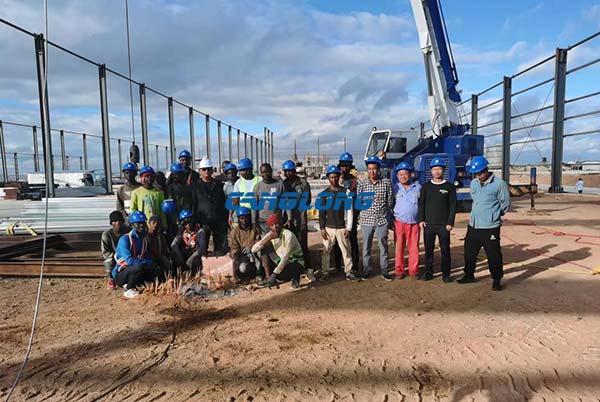
Local workers have varying skill levels, leading to frequent errors in concrete pouring and steel structure installation (e.g., crooked columns, uneven walls), resulting in high rework rates. Construction during the rainy season (March-May and November-December) directly slows down progress by 50%.
2.3. Complicated Post-Construction Maintenance
Tropical climates cause rapid corrosion to buildings. Ordinary brick-and-mortar factory buildings require roof and wall repairs approximately every 5 years. Aging electrical circuits and drainage blockages are also commonplace.
III. Canglong Group’s Steel Structure Solution
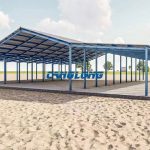
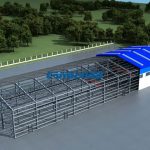
Addressing the specific circumstances in Tanzania, Canglong Group offers a one-stop steel structure factory solution encompassing design, manufacturing, transportation, and construction, effectively addressing various “factory construction difficulties”:
3.1. Localized and Lightweight Materials, Saving Money and Hassle
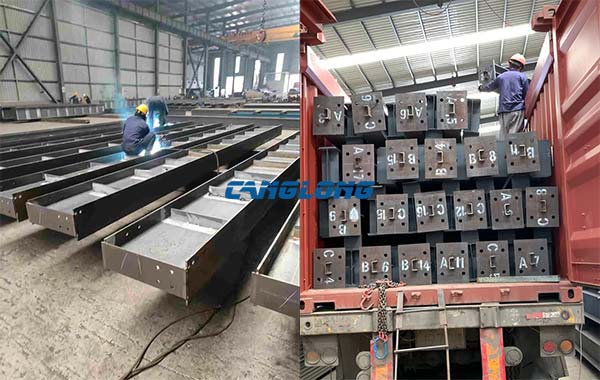
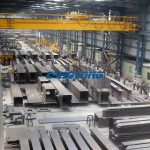
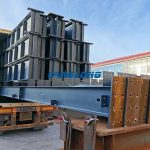
The main steel components (H-beams and C-beams) are prefabricated in a Chinese factory and shipped to Tanzania (in cooperation with COSCO Shipping, freight costs are 10% lower than market prices).
Wall panels/roof panels use 0.5mm thick aluminum-zinc coated single-metal sheets, 70% lighter than local cement walls, eliminating the need for heavy foundations; installation can be done directly on leveled land, saving 30% on foundation costs.
Matching accessories such as PVC drainage pipes and aluminum alloy doors and windows are all shipped with the steel components, eliminating the need for local procurement.
3.2. Factory Construction in 3 Months, Working Even in the Rainy Season
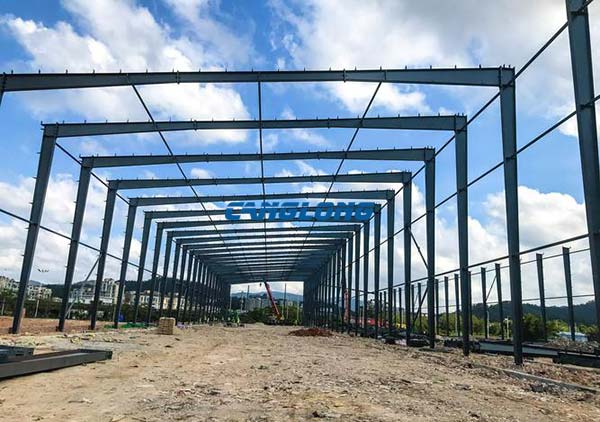
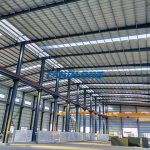
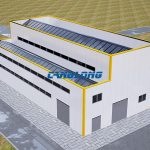
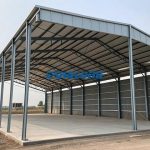
Portal frame structure design, spans exceeding 30 meters, with no internal columns obstructing equipment placement. On-site connections use only bolts, no welding required. Ten workers can install 200 square meters per day.
Rainy season construction? We’ll provide temporary rain shelters. Steel components undergo pre-treatment for rust prevention (epoxy zinc-rich primer + fluorocarbon topcoat), so they won’t rust even in rain.
From contract signing to delivery, as fast as 3 months – start production sooner, start earning sooner!
3.3. Corrosion resistant and easy to maintain, worry-free for 20 years
All steel components are hot-dip galvanized (zinc layer thickness ≥80μm), able to withstand Tanzania’s high temperatures, heavy rain, and termite infestation, extending their lifespan by 10 years compared to ordinary steel structures.
Wall/roof panels use a lock-locking process for seamless splicing, preventing leaks even in heavy rain.
Canglong provides 5 years of free maintenance (including bolt tightening and coating repair). For any issues later, we will respond within 48 hours.
IV. Real-World Case Study
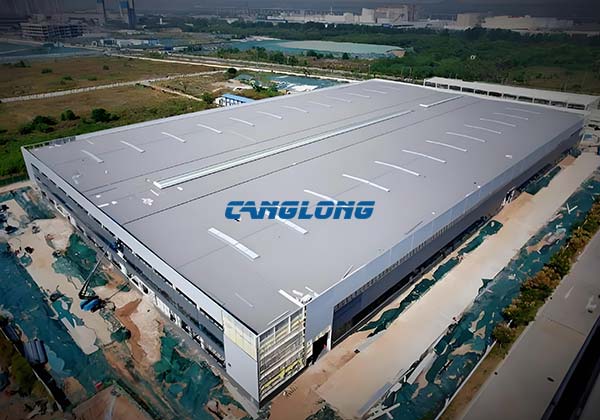
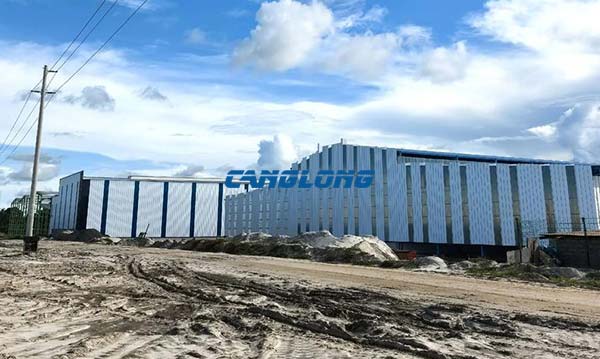
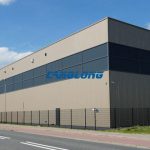
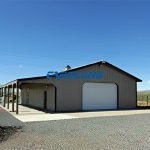
Last year, Canglong helped a local building materials factory build a 2000㎡ steel-structured factory in Dar es Salaam:
Completed in 3 months, 2 months ahead of schedule.
The total cost was 25% lower than a brick-and-mortar factory, saving on material transportation costs and rework labor costs.
This rainy season, while the neighboring brick-and-mortar factory was forced to shut down due to leaks, this factory maintained normal production, and its order volume increased by 40%.
Building a factory in Tanzania, choosing the right solution is more important than the lowest price. Canglong Group has been rooted in Africa for 10 years, understanding policies, climate, and needs. All you need to do is tell us “how big of a factory you need” and “what it will be used for”, and leave the rest to us!
Canglong Group: A certified service provider of the Tanzania Investment Centre, providing factory construction solutions for 30+ companies.